What is SEO for International Business?
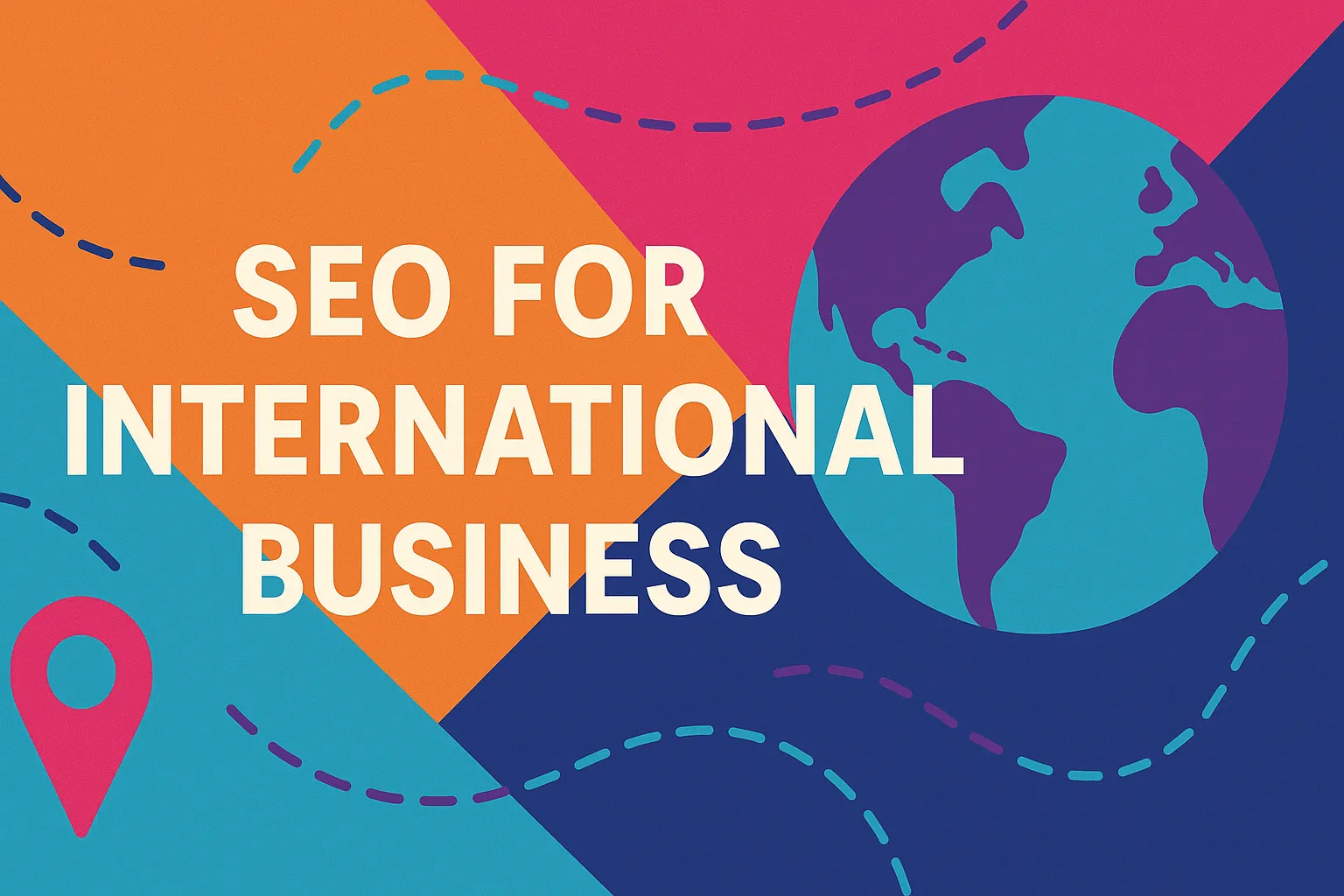
SEO for international business is the process of optimizing your website so it ranks well in search engines like Google—not just in your home country, but in other countries and languages too. It ensures your content is discoverable whether someone is searching from Toronto or Tokyo.
This involves language targeting, cultural localization, keyword research by region, and site infrastructure adjustments. When done right, it brings in global traffic, builds trust with diverse audiences, and drives international sales—without relying heavily on paid ads.
TL;DR
- Learn what “SEO for international business” means and why it matters.
- Discover how we at Vibe Branding use our 10+ years of experience to build global visibility.
- Understand how to choose target markets and create region-specific strategies.
- Find out the technical SEO and content strategies that actually work across borders.
- Learn from our personal wins and lessons scaling brands into international markets.
How We Got Started with Global SEO at Vibe Branding
When I launched Vibe Branding over ten years ago, our roots were deeply local. We were helping small to medium-sized businesses dominate their local search rankings—think Google Maps, location-specific keywords, and nearby competitors.
But as some of our clients grew into national or even international brands, we had to evolve. Our first real dive into SEO for international business came with a skincare brand that wanted to expand into Australia and Canada.
It wasn’t just about translating the site into English—they were already using that language. The challenge was seasons, product needs, slang, and regional search behaviors.
Summer in the U.S. meant winter in Australia, and product focus had to shift accordingly. We quickly learned that global SEO wasn’t just about translation—it was about understanding the whole picture.
Using Research to Guide Global Expansion
Before we start any campaign, we look at the data. That means diving deep into Google Analytics, GA4, and Semrush to answer critical questions:
- Where is traffic already coming from?
- Are there surprise countries sending interest?
- What keywords are trending in those areas?
If we see organic interest from, say, Germany or Singapore, that’s our cue to investigate further. This kind of data-backed market discovery helps us avoid wasting time and resources on markets that aren’t ready yet.
The goal is always to match real demand with tailored SEO strategy.
Creating a Region-Specific Content and Keyword Map
Every country has its own way of searching—even if they speak the same language. For instance, someone in the UK might search for “eco office supplies,” while in Germany, they’d search for “nachhaltige Büroartikel.”
A direct translation just won’t cut it. We conduct native-level keyword research and build out a dedicated map for each region, ensuring that content connects with local culture, terminology, and consumer behavior.
And it’s not just about content. We also localize:
- Currency formats
- Date formats
- Spelling (color vs. colour)
- Navigation and UX preferences
Choosing the Right Site Structure for International SEO
Getting the technical setup right is essential. That includes choosing whether to use:
Option | Example | Pros | Cons |
ccTLD | example.de | High trust, great geo signals | Costly to maintain multiple sites |
Subdomain | de.example.com | Easier setup, some geo relevance | Weaker link equity |
Subdirectory | example.com/de | SEO-friendly, easy to manage | Slightly weaker geo targeting |
At Vibe Branding, we work with clients to choose the right structure based on their goals, budgets, and technical bandwidth. There’s no one-size-fits-all solution—it has to match the business plan.
Implementing Hreflang Tags the Right Way
One of the biggest mistakes we see in SEO for international business is misusing or skipping hreflang tags. These tags tell search engines which language and region version of a page to serve.
We always include properly coded hreflang tags on every internationalized site we work on. Without these, Google may serve the wrong version to users—or worse, think your pages are duplicates.
And no, automatically redirecting visitors based on IP isn’t a good solution. That frustrates users and can lead to crawling issues.
Instead, we let users select their region and language manually while giving Google the correct cues behind the scenes.
Localizing Content Beyond Translation
Translation isn’t localization. That’s one of the first things we educate clients on.
We’ve worked with companies who thought one Spanish version of their site would work for Mexico, Argentina, and Spain. Spoiler: it didn’t.
Each version of Spanish carries its own nuances. And beyond language, there’s cultural relevance.
For a tech client expanding into Latin America, we rebuilt three region-specific versions of their Spanish site. This included new blog titles, rephrased CTAs, and culturally relevant examples.
The result? A 50% increase in engagement in the first 60 days.
The Importance of International Backlink Strategies
Google values backlinks from local websites in the regions you’re targeting. That’s why we focus on acquiring high-quality backlinks from:
- Local blogs and news outlets
- Country-specific directories
- Influencers and PR campaigns in-region
This increases domain authority and builds trust with local search engines. We’ve even partnered with local agencies to help with outreach campaigns tailored to each culture.
These backlinks carry more weight than any from your home country—and they drive the type of traffic that converts.
Combining Paid and Organic for Faster Global Wins
While we’re firm believers in organic SEO, sometimes you need an initial traffic push. We often combine our SEO for international business strategy with localized paid ads—especially when entering a new market.
This gives you brand visibility while your organic rankings ramp up. Once the SEO begins to perform, we scale back the ads and enjoy sustained, low-cost traffic.
It’s all part of the global launch lifecycle we manage at Vibe Branding.
Content Remixing for Global Audiences
Another powerful tactic we use is something we call Content Core Remixing. We take one high-performing content asset and adapt it to different markets.
For example, a blog post written for the U.S. market may become:
- A listicle for the UK
- A how-to guide for Japan
- A comparison piece for Canada
This approach saves time and increases content ROI—while still delivering locally tailored value. It also improves topical authority across language-specific content clusters, which helps SEO.
Project Management for International Campaigns
SEO for international business isn’t just complex—it’s operationally heavy. At Vibe Branding, we run our campaigns with serious project management discipline.
We use ClickUp to track content creation, localization tasks, technical updates, backlink outreach, and analytics reporting for every market. Every country or region has its own workflow.
Our teams meet weekly to review international KPIs and adjust. This lets us scale without losing quality or vision.
How We Measure Global SEO Success
Here’s a look at the key KPIs we track per region:
KPI | Why It Matters |
Organic Traffic | Shows regional visibility and discoverability |
Bounce Rate | Reveals relevance of content to target users |
Time on Page | Indicates engagement and content quality |
Conversion Rate | Measures ROI and user intent fulfillment |
Local Keyword Rankings | Tracks progress in SERPs by region and language |
We also use heatmaps and scroll depth tools to understand engagement across different cultures. What works in Brazil may not work in Canada—and that’s the insight that drives iteration.
Is International SEO Worth It for Small Businesses?
Absolutely—but only if you commit to doing it well. We’ve helped a small U.S. eCommerce brand expand into the UK and Ireland just by creating local landing pages, adding GBP pricing, and doing light outreach for local backlinks.
Within 6 months, international traffic made up 22% of their revenue. The key is to start smart.
Choose one or two countries. Build trust.
Learn the language of your audience—literally and emotionally. Then expand from there.
Final Thoughts
Over the last decade, we’ve seen that SEO for international business isn’t just a tactic—it’s a transformational strategy. It changes how you think about your audience, your voice, and your growth potential.
At Vibe Branding, we’ve built our reputation on helping brands expand smartly, sustainably, and authentically across borders. Global SEO is both an art and a science.
It takes research, empathy, strategy, and iteration. But if you’re willing to invest, the return is massive.
Visibility, trust, and revenue on a worldwide scale—powered by search.