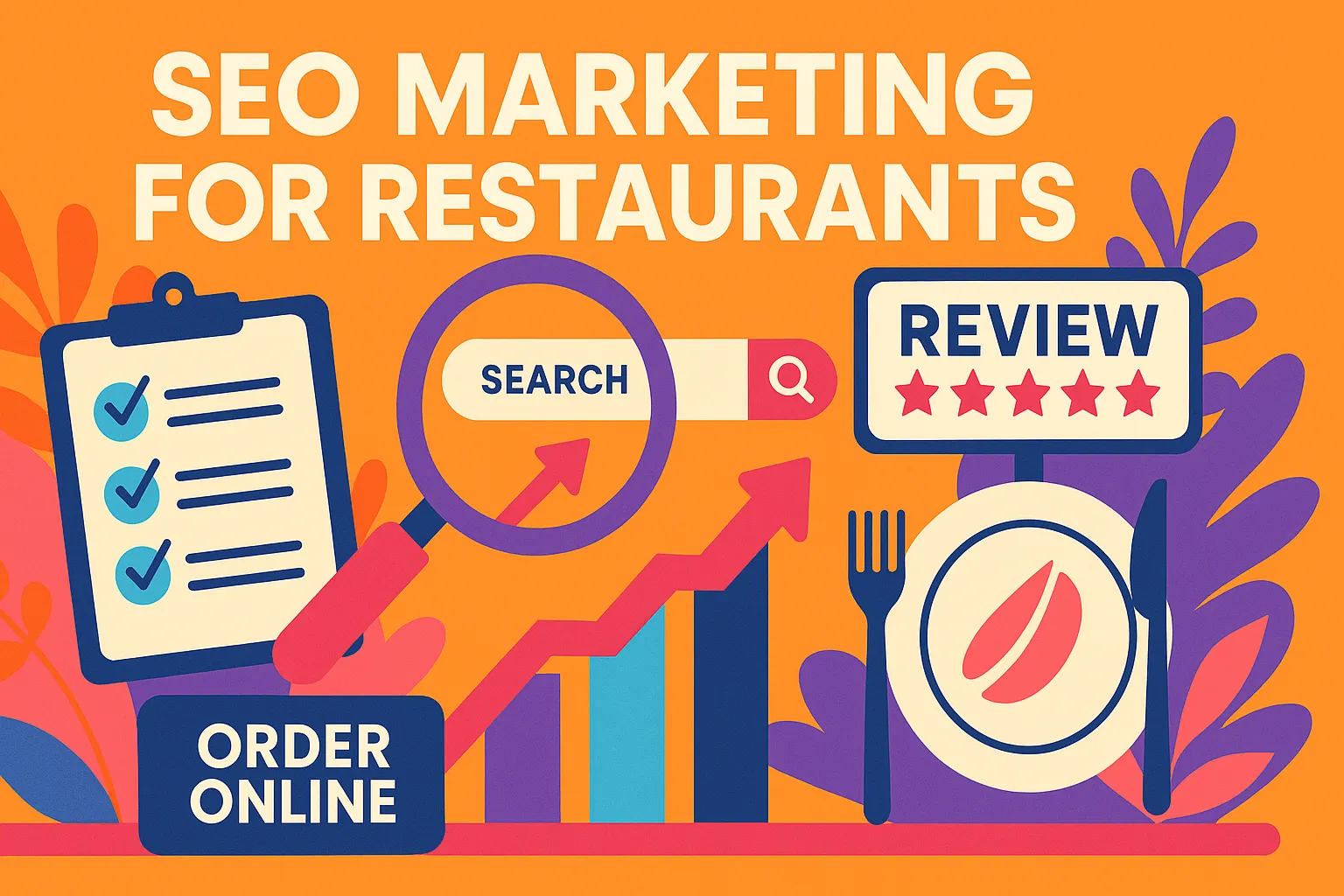
What “SEO Marketing for Restaurants” Really Means
When I talk about seo marketing for restaurants, I mean tailoring search engine optimization to the unique way diners look for food. It’s not about chasing random traffic; it’s about being visible in the exact moment someone types “best tacos near me” or “romantic sushi spot in Brooklyn.”
Over the last decade at Vibe Branding, we’ve tested dozens of SEO frameworks, and restaurant marketing remains the most rewarding. Restaurants have local intent baked into every search, which means every ranking win can translate directly into walk-ins or online orders.
TL;DR (Too Long; Didn’t Read)
- SEO is still the #1 channel for restaurant discovery and online orders.
- I’ll show how we use proven restaurant-focused SEO to drive reservations and sales.
- You’ll learn how Google Business Profiles, keywords, and on-page tweaks create local visibility.
- I’ll walk through the three biggest wins and six pillars that consistently lift search rankings.
- Real examples from our 10 years at Vibe Branding—what works, what to avoid, and how to measure it.
Why SEO Matters More Than Ever for Restaurants
Back in 2015, when I first started consulting small eateries, most owners still believed Instagram alone could fill their tables. But social posts vanish quickly, and ads stop the moment you pause spending. SEO, by contrast, compounds.
A well-optimized restaurant website continues to bring in new guests long after the initial setup. Data from Google’s food service report shows that over 80% of diners search online before deciding where to eat, and nearly 60% read reviews before booking.
That’s why our clients see up to 3× more online orders once their search visibility improves. Search rankings aren’t about vanity—they’re about intent. When someone’s hungry and searching, they’re minutes away from becoming your customer.
That’s what drew me to focus on seo marketing for restaurants in the first place: it connects directly to revenue, not just likes or impressions.
How SEO Attracts Local Customers
In my experience, restaurants win locally by mastering three discovery touchpoints: Google Maps, “near me” searches, and online reviews. Google’s Map Pack appears in 93% of local dining queries.
That’s where your phone number, address, and review stars decide if someone clicks you or the place next door. Optimizing your Google Business Profile is step one—accurate hours, updated photos, and a mouth-watering description make you look credible instantly.
The next layer is visibility for those crucial “near me” and “[dish] in [city]” keywords. I still remember helping a small ramen bar in Queens add “best tonkotsu ramen in Queens” to its homepage title.
Within six weeks, their calls from Google Maps doubled. Reviews tie it all together: fresh, detailed feedback signals activity to Google’s algorithm and trust to hungry searchers.
Restaurants that reply to reviews—good or bad—consistently climb in the rankings.
The Six Pillars of Effective Restaurant SEO
After a decade refining campaigns, I’ve boiled down restaurant SEO into six repeatable pillars. Each one supports both ranking and customer experience.
Pillar | Focus Area | Outcome |
1. On-Page SEO | Titles, headings, internal links | Clear relevance to cuisine and location |
2. Local SEO | GBP, citations, reviews | Map Pack visibility |
3. Technical SEO | Mobile speed, crawlability | Faster site, higher retention |
4. Content | Menus, events, blog stories | Ongoing freshness signals |
5. Off-Page | Backlinks, PR mentions | Authority & trust |
6. Analytics | Tracking, conversions | Continuous improvement |
When we apply all six together, search traffic typically rises by 30-50% within three months. The synergy matters—one optimized page can’t compensate for missing reviews or a sluggish site.
Big Win #1: Perfecting the Google Business Profile
If I had to pick the single most valuable tactic, it’s treating your Google Business Profile like a second website. We start every restaurant campaign at Vibe Branding by auditing the GBP line by line.
I make sure the Name-Address-Phone are consistent everywhere—from Yelp to TripAdvisor. Then we upload crisp photos of signature dishes and interior shots that reflect real ambiance. I learned early that Google loves engagement.
When people click your photos, request directions, or call directly from that profile, the algorithm rewards you. So we post short weekly updates—specials, trivia nights, chef features—to show the business is alive.
Restaurants that do this get more “call” and “menu” clicks than those that ignore the profile. It’s the simplest foundation of seo marketing for restaurants, yet the most overlooked.
Big Win #2: Using “[Dish] in [City]” Keywords the Smart Way
Search engines crave clarity. By adding dish + location phrases to key website spots, you tell Google exactly what you offer and where.
For example, one of our Italian clients titled their homepage “Best Pasta in Lakeside | Ottavio’s Italian Kitchen.” Within eight weeks, they reached the top 3 for that phrase and saw 40% more bookings.
We embed these terms in the homepage title tag, meta description, and first paragraph. Then we sprinkle variations naturally into menu item descriptions.
This approach humanizes SEO—it reads well to guests while feeding the algorithm rich context. If your restaurant covers multiple cuisines or neighborhoods, you can expand it with a mini keyword matrix like this:
Cuisine Type | Example Keyword Phrase |
Sushi Restaurant | “Best Sushi in Brooklyn” |
Mexican Restaurant | “Authentic Tacos in Queens” |
Italian Restaurant | “Best Pasta in Lakeside” |
Café | “Cozy Coffee Shop in SoHo” |
These micro-optimizations are small tasks that yield measurable returns—exactly the kind of leverage I look for in client work.
Big Win #3: Adding Features Diners Actually Use
Google monitors how visitors behave on your website. If people arrive and instantly leave, rankings fall.
That’s why we design restaurant sites around three high-intent actions: view menu, reserve table, and order online. Each should be accessible within one click from the homepage.
Years ago, one of our Brooklyn clients linked their “Order Now” button to a third-party delivery platform. We noticed users leaving the site in seconds, and bounce rates shot up.
After we integrated direct online ordering within their own domain, traffic retention improved by 62%. Google saw people staying longer and rewarded the site with higher visibility.
These usability tweaks blend UX and SEO—the invisible handshake that tells search engines, “people like this site.” And in seo marketing for restaurants, engagement equals ranking power.

Local SEO Tactics That Make the Biggest Difference
One thing I’ve learned after years of helping restaurants grow is that local SEO is where the real competition happens. Google doesn’t just look at who has the best website — it looks at who owns the neighborhood online.
That’s why we always start with location accuracy and review momentum. We ensure the restaurant’s name, address, and phone number appear identically across every directory, from
Yelp and TripAdvisor to niche foodie platforms. This consistency tells Google, “this business is real and dependable.”
Another tactic we’ve mastered is keeping the Google Business Profile updated weekly. If a restaurant changes its hours for holidays or adds new dishes, those updates signal freshness. Positive reviews are the secret ingredient.
When diners describe specific menu items in their review — “the best Pad Thai in Tampa” — that text naturally reinforces your keyword relevance. I also encourage owners to respond personally to reviews.
Engagement doesn’t just please customers; it increases Google’s trust that you’re active. Finally, we build backlinks through local collaborations — sponsoring events, getting mentioned by community blogs, and trading shout-outs with nearby coffee shops or bakeries.
Those local signals can often outrank big national chains.
Content That Wins Clicks and Builds Loyalty
When I first started helping restaurants, few believed blogging had any place in their marketing. Today, it’s one of the most powerful tools in seo marketing for restaurants.
Content tells your brand’s story while expanding your search footprint. For example, a steakhouse we worked with began posting short “Chef’s Notes” about seasonal ingredients.
Within months, those posts ranked for terms like “best dry-aged steak in Chicago.” It’s simple storytelling that feeds Google’s appetite for new, relevant content.
A good mix includes upcoming events, new menu items, behind-the-scenes stories, and local collaborations. Each post gives Google fresh pages to index while showing personality.
Regularly updating menus and adding event pages — such as Valentine’s specials or wine-pairing nights — also signals that your restaurant is active. I tell clients: every new page is another doorway for a hungry customer to find you.
To stay consistent, we schedule content in quarterly cycles — aligning with holidays, local festivals, or seasonal menus. It’s part marketing, part hospitality, and 100% SEO fuel.
Off-Page SEO: Building Authority Beyond Your Website
Your online reputation doesn’t stop at your domain. Backlinks — links from other sites to yours — remain one of Google’s strongest trust signals.
But not all links are equal. A single mention from a respected local food blog can outperform dozens of random directory listings.
We help clients earn these by building genuine relationships: hosting food tastings for journalists, partnering with charities, and creating limited-edition dishes that attract press coverage.
Another underused tactic is reaching out to local media with human-interest stories. “Family-owned diner celebrates 50 years” or “Chef launches a zero-waste kitchen” are headlines editors love.
Each published article strengthens both your SEO and your community ties. As a CEO, I’ve learned that the restaurants with heart-driven stories tend to get the most backlinks — because people want to talk about them.
This is also where we weave social media into SEO strategy. Sharing these stories on Instagram or Facebook creates branded searches, which tell Google your restaurant is popular enough for people to search by name.
That’s a ranking advantage you can’t buy with ads.

The Long-Term ROI of SEO
After ten years in this field, I’ve seen one pattern repeat across hundreds of campaigns: SEO is slow to start but unstoppable once momentum builds. Paid ads stop the second you stop paying.
SEO keeps generating leads months or even years later. One sushi client we optimized back in 2020 still ranks top three in their area — and they haven’t spent a dime on ads since.
The return on investment comes in multiple forms: direct online orders, more catering inquiries, increased brand searches, and better profit margins from cutting third-party commissions. The best part?
It compounds. Each month adds another layer of trust in Google’s eyes.
For any restaurateur, this is the ultimate win. You’re no longer chasing customers — they’re finding you.
A Personal Note from the CEO’s Chair
Running Vibe Branding has taught me that great marketing is equal parts art and empathy. Restaurants aren’t faceless brands; they’re living experiences built by passionate people.
My role is simply to translate that passion into digital visibility. Every review, photo, and keyword becomes part of that story.
If you take one thing away from this article, let it be this: seo marketing for restaurants isn’t about gaming algorithms — it’s about aligning your online presence with the care you already put into your food and guests. Do that consistently, and the rankings will follow naturally.
We’ve spent a decade refining this process, learning from small cafes and Michelin-level dining rooms alike. The tools might evolve, but the principle never changes: visibility follows authenticity.
That’s the heartbeat of great restaurant SEO — and it’s what keeps me excited to do this work every single day.