What Does “Marketing Strategy for Coffee Shop” Mean?
A marketing strategy for coffee shop is the step-by-step plan a café uses to attract new customers, increase sales, and build long-term loyalty. It’s not just about posting on Instagram or offering discounts. It’s a connected system that blends branding, local SEO, social media, in-store promotions, and customer relationships.
From defining your unique voice to tracking results, it’s the roadmap that keeps your business visible, engaging, and profitable. At Vibe Branding, we’ve spent over ten years creating these roadmaps for independent cafés across the country.
We’ve seen the difference between shops that rely on luck and those that grow by design — and this guide was written to help you build the second kind.
TL;DR (Too Long; Didn’t Read)
- A marketing strategy for coffee shop owners must go beyond word-of-mouth to build predictable growth.
- Successful cafés combine branding, digital presence, and community engagement into one consistent system.
- Social media, Google Business Profile (GBP), and loyalty programs create repeat visits and measurable ROI.
- Partnerships, in-store experiences, and data tracking turn first-time customers into lifelong fans.
- This article breaks down the same framework I’ve used for over a decade helping cafés and restaurants grow through Vibe Branding.

Why Coffee Shops Need a Real Marketing Plan
When I first started consulting café owners, I noticed a pattern. Most of them believed great coffee and friendly service would naturally attract people.
But in today’s world, people often discover coffee shops online before they ever walk through the door. Without a clear marketing plan, even the best brew can go unnoticed.
Relying on word-of-mouth alone is unpredictable. A structured marketing strategy for coffee shop gives you control.
It helps you schedule promotions, manage slow seasons, and track what’s working. Instead of guessing, you can make data-driven decisions about your menu, pricing, and campaigns.
Digital visibility also levels the playing field. A single-location café can outrank a franchise if it maintains consistent reviews, fresh posts, and local SEO optimization.
The marketing strategy doesn’t replace passion — it amplifies it, helping your story reach the people who’ll love it most.
Common Challenges for Independent Cafés
Running a small coffee shop means wearing every hat. You’re the owner, barista, accountant, and social media manager all in one.
Time and budget are the two biggest obstacles I see. Many owners struggle to post consistently or analyze marketing data.
Others invest in ads without knowing if they convert. These challenges are real, but they’re solvable.
We’ve helped dozens of cafés overcome them by simplifying their strategy into weekly habits: batching content one day per week, using automation tools for emails, and tracking performance with a simple dashboard. Another challenge is differentiation.
When five coffee shops exist in a one-mile radius, your story matters more than your roast. That’s why every successful plan starts with defining who you are and why customers should care.
Once you identify your target audience and brand values, every decision — from music to menu names — supports that message.
Building a Strong Foundation: Brand, Audience, and Experience
Before diving into ads or content, you need a foundation that resonates. Your brand is more than a logo; it’s the feeling people have when they sip your latte.
At Vibe Branding, we help café owners define four pillars: Product, Price, Place, and Promotion. The table below shows how each one connects to daily operations.
Pillar | Focus Area | Real-World Example |
Product | Quality coffee, unique menu, local ingredients | Introduce a seasonal drink inspired by your town |
Price | Competitive yet profitable pricing | Bundle coffee + pastry for commuters |
Place | Location, design, ambience | Create seating zones for study, chat, and quick pick-ups |
Promotion | Marketing channels and events | Rotate weekly GBP posts and local collaborations |
Once your foundation is solid, you can scale every tactic with confidence. A consistent brand voice — from the chalkboard menu to Instagram captions — turns one-time visitors into loyal advocates.
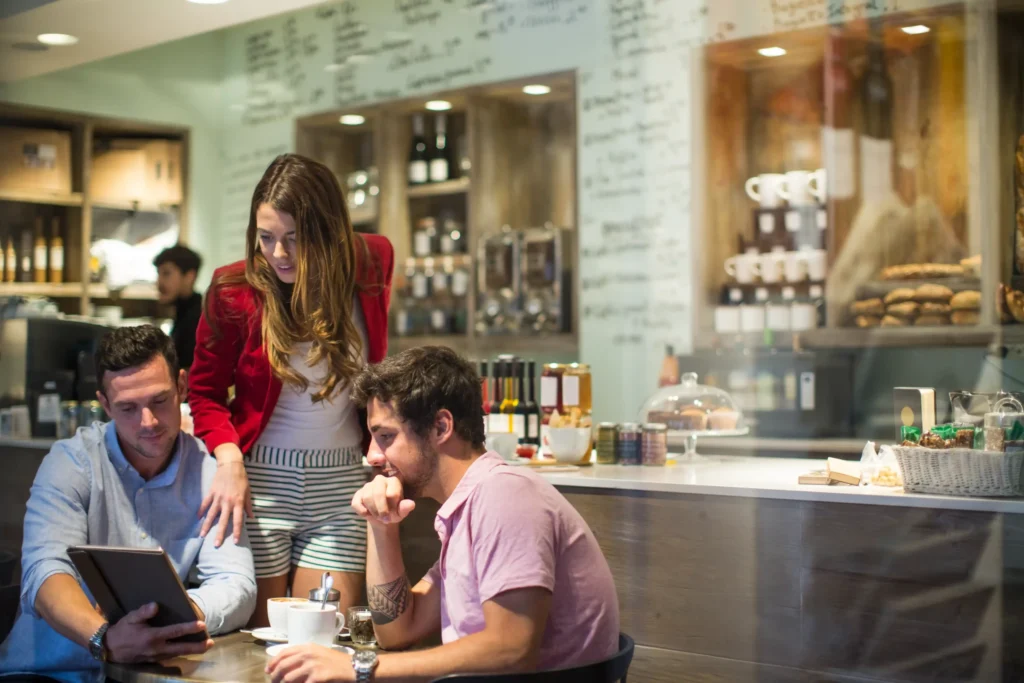
Digital Visibility: Google Business Profile and Local SEO
If your coffee shop doesn’t show up when someone searches “coffee near me,” you’re invisible to your neighborhood. That’s why optimizing your Google Business Profile (GBP) is one of the highest-ROI steps in any marketing strategy.
Start by claiming your listing, adding accurate hours, and uploading high-quality photos. Include keywords naturally in your description, such as your neighborhood name and signature drinks.
Post updates weekly — new pastries, live music nights, or limited-time drinks — to keep your profile active. Google rewards freshness.
Local SEO goes beyond GBP. Make sure your name, address, and phone number are identical across Yelp, TripAdvisor, and social media.
Add schema markup to your website so search engines recognize your menu and location. When paired with regular review responses and backlinks from local blogs, you can outrank even national chains within your city.
Social Media That Builds Real Relationships
Over the past decade, I’ve seen social media evolve from optional to essential for coffee shops. Platforms like Instagram, Facebook, and TikTok aren’t just for photos — they’re storytelling tools. The goal isn’t to post daily, but to post intentionally.
Your followers want to see people, not just cups. Share behind-the-scenes moments: latte art fails, your team’s favorite roasts, or how you decorate for the holidays.
These glimpses humanize your brand and make people feel part of your story. Mix up your content types — short videos, polls, customer spotlights, and memes all keep your page dynamic.
When one of our café clients in Brooklyn began sharing 15-second videos of latte pours and customer shoutouts, their engagement tripled within two months. The key to success on social platforms is consistency and personality.
Decide what tone matches your brand — whether that’s cozy, quirky, or minimalist — and apply it everywhere. Authenticity always performs better than perfection.
Community Marketing and Local Partnerships
Even after a decade in digital marketing, I still believe nothing beats human connection for coffee shop growth. A great marketing strategy for coffee shop owners must include grassroots involvement.
Partnering with nearby gyms, bookstores, or florists can introduce your café to hundreds of new customers at once. I’ve seen shops host “Coffee & Blooms” weekends with flower vendors or give gym members a small post-workout discount—both drove steady traffic without expensive ads.
Local events also create emotional equity. Hosting open mic nights, art shows, or charity fundraisers invites people to see your space as part of their community, not just a business.
When people form memories in your café, they become brand advocates who bring friends. Always collect contact info during events through QR codes or digital raffles to grow your marketing list for future promotions.
Offline and online marketing feed each other. Post about your events on social media, upload photos to your GBP, and encourage attendees to tag your café.
This cross-promotion doubles your reach and gives new life to your content calendar. In the long run, a café that shows up consistently in its community becomes the go-to spot for coffee, connection, and comfort.

Low-Cost Tools Every Coffee Shop Should Use
Over the years, I’ve experimented with dozens of marketing platforms. For cafés, I recommend starting with simple, affordable tools that deliver the most value.
Canva makes it easy to create professional social posts that match your brand. Meta Planner and TikTok’s native scheduler help automate posting so you can focus on running the shop.
For email and SMS, tools like MailerLite or Klaviyo provide automation without requiring a full-time marketer. Track results with Google Business Insights and a free dashboard in Looker Studio that combines POS data, website visits, and review growth.
If you can see all your performance metrics in one place, you’ll make better decisions faster. Most of our clients spend less than $100 a month on their total tool stack, proving that professional marketing doesn’t require a large agency retainer.
Advanced Plays for Established Coffee Shops
Once your basics are consistent, there are advanced tactics that can multiply your impact. Try weather-based promotions—offering discounted cold brew during a heat wave or free espresso shots on rainy days.
These micro-campaigns perform extremely well because they tap into real-time emotion. You can also experiment with hyperlocal ads targeting people within a three-mile radius on Google Maps or Instagram.
I’ve run campaigns like these for clients where customers literally said, “I saw you on my map and stopped by.” The ROI was immediate.
Lastly, collaborate with local creators or micro-influencers to design limited-edition drinks or merchandise. One café we worked with launched a “Creator Latte” series, each designed by a local artist.
Not only did the drinks sell out, but the influencer videos drove thousands of new views to their page. Creativity paired with data creates unstoppable momentum.
Common Mistakes (and Easy Fixes)
Even the best marketing ideas fail without focus. One of the biggest mistakes I see is inconsistent posting.
A week of silence followed by ten posts confuses both customers and algorithms. The fix is to schedule content in advance.
Another common error is discounting too often. While promotions can drive traffic, constant discounts lower perceived value.
Instead, bundle drinks with pastries or offer limited-time flavors that create urgency without cutting profit. Many cafés also forget to ask for reviews or ignore negative ones.
Every review deserves acknowledgment—it shows accountability and builds trust. Finally, don’t spread yourself across every social platform.
Choose two and master them. When you dominate your local area, expand later.
The goal is controlled growth, not constant juggling.

Creating a Plan You Can Actually Execute
After ten years of helping brands grow, I’ve learned that the best plan is one you can repeat. The first 30 days should focus on visibility: optimizing your Google Business Profile, improving photos, and encouraging reviews.
The next 30 should expand your reach through collaborations and community events. Beyond that, add automation — scheduled emails, loyalty reminders, and monthly analytics reviews.
Break your goals into small, trackable wins. Instead of “grow social media,” aim for “gain 200 local followers this month.”
Instead of “improve reviews,” aim for “respond to every review within 24 hours.” These micro-goals add up to massive progress when applied consistently.
At Vibe Branding, we use this same approach internally. Our own growth came from refining habits, tracking results, and adjusting strategy—not from chasing trends.
Why This Strategy Works
A coffee shop thrives when it’s more than a caffeine stop; it becomes a part of people’s routines and stories. The strategies in this guide create that outcome by blending visibility, authenticity, and human connection.
You’re not just selling coffee—you’re selling belonging. Every photo, caption, and community event builds the emotional bridge between your brand and your audience.
When customers see you online, visit your café, and feel recognized when they return, marketing transforms into loyalty. That’s the real secret behind a successful marketing strategy for coffee shop owners: connecting heart and habit.
Conclusion: Build a Café That Grows by Design
After more than a decade in digital marketing, I can tell you that success doesn’t happen by accident—it happens by structure. A thoughtful marketing strategy for coffee shop gives you that structure.
It turns your story into a system and your customers into community. If you’re ready to take your café beyond daily transactions, start small.
Claim your Google listing, share your story on social media, and create experiences people remember. From there, data, creativity, and consistency will do the rest.
At Vibe Branding, we’ve spent over ten years helping small businesses like yours turn local visibility into lifelong loyalty. Let’s brew something remarkable together—one strategy, one post, and one cup at a time.