What is “SEO Optimization Business”?
At Vibe Branding, we’ve spent the last 10 years helping businesses grow through smart, effective, and future-proof digital strategies. One phrase we’ve heard clients ask us about again and again is “SEO optimization business.” Let’s simplify it.
When we talk about an SEO optimization business, we’re really talking about using search engine optimization techniques in a business context to improve online visibility. In short, it’s all about making sure your website appears where your customers are searching.
This means creating content that answers their questions, optimizing your site’s technical structure so Google can understand it, and building authority through links and engagement. We’ve used this approach to help brands of all sizes—from local startups to national franchises—generate real results like traffic, leads, and long-term growth.
TL;DR: What You’ll Learn in This Post
- What “SEO optimization business” really means and why it matters
- How businesses benefit from SEO for traffic, visibility, and lead generation
- The step-by-step breakdown of a winning SEO strategy
- Tools, tactics, and timelines for measurable results
- Common SEO mistakes and how to avoid them
- Whether to build in-house SEO or hire an expert team
- What SEO metrics matter and how to track success
- Why SEO works best when it integrates with other digital marketing strategies
Why SEO Optimization Is Essential for Business Growth
Running a business today without SEO is like opening a store and forgetting to put a sign out front. You might have amazing products, an inspiring mission, or life-changing services—but if people can’t find you online, your growth will always hit a ceiling.
I’ve seen this firsthand. One of our clients had a gorgeous, well-designed website, but no SEO in place.
They were getting fewer than 100 visits a month. After building out an SEO optimization business strategy tailored to their industry, they’re now driving over 20,000 visits a month and have more qualified leads than their sales team can handle.
Organic search drives over half of all web traffic. When done right, SEO helps you show up at the exact moment someone is looking for what you offer.
That’s powerful. And with AI reshaping how search works—from Google’s AI Overviews to tools like ChatGPT—businesses need to be more intentional about visibility.
SEO isn’t just about rankings anymore. It’s about relevance, trust, and timing.
And that’s why SEO optimization business strategies are crucial for modern growth.
The Core Components of a Winning SEO Optimization Strategy
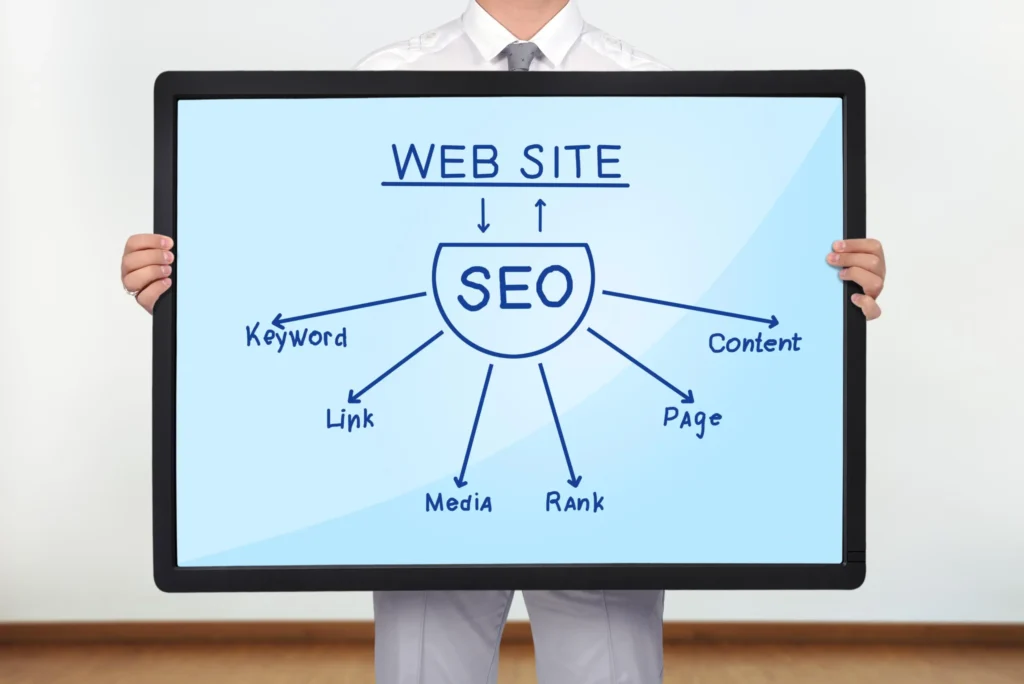
When we build SEO strategies at Vibe Branding, we break it down into three major areas: technical SEO, on-page SEO, and off-page SEO.
Each of these plays a vital role in creating a strong foundation and growing authority online. Technical SEO is all about your website’s performance and infrastructure.
We look at things like site speed, mobile usability, secure HTTPS, and crawlability. A fast, mobile-friendly site doesn’t just help rankings—it helps your users stick around.
If search engines can’t read your site properly, they won’t rank it. One client we worked with had dozens of pages blocked from being indexed because of a simple robots.txt error.
Fixing that led to a 30% increase in organic traffic in just three weeks. On-page SEO involves optimizing the content you see—your headers, keywords, meta descriptions, images, and URLs.
But it’s not just about stuffing keywords. We focus on intent-based content that answers real questions.
Our content team uses a technique called topic clustering, where related articles are grouped and linked together to build topical authority. Off-page SEO is about building trust.
This is where things like backlinks, reviews, social shares, and mentions come in. Google wants to know that other people find your site valuable.
We help businesses build legitimate, white-hat backlinks that drive not just authority—but referral traffic, too. For a SaaS client, we secured a link from a top-tier publication that drove over 10,000 visits in a single month.
Choosing the Right SEO Tactics for Your Business
Every business is different. Your SEO strategy shouldn’t be a copy-paste job.
One of the first things we do with new clients is conduct a detailed audit and discovery session to find out what their goals are. Are they trying to drive ecommerce sales?
Get more demo bookings? Improve foot traffic to their local store?
Each goal requires a different mix of tactics. Some businesses benefit most from local SEO—things like optimizing their Google Business Profile, gathering local reviews, and using location-specific keywords.
Others may need a more aggressive content strategy. For example, we worked with a B2B company targeting enterprise contracts.
They didn’t need a million visitors a month—they needed the right 50. We built long-form content around high-intent keywords and saw lead quality improve dramatically within two quarters.
The key is alignment. Your SEO optimization business plan should align with your customer journey.
From awareness to decision-making, your content and site structure should guide people every step of the way. That’s what separates okay SEO from strategy-driven success.
Tools and Resources We Use in Our SEO Optimization Business
You can’t win in SEO without the right tools. At Vibe Branding, we use a stack of industry-leading platforms that help us track performance, discover opportunities, and execute efficiently.
Whether you’re doing this in-house or working with a partner, here are a few tools we swear by:
Tool Name | Purpose |
Google Search Console | Crawl & index insights, ranking data |
Semrush | Keyword research, site audits, backlinks |
Ahrefs | Competitive research, link analysis |
Screaming Frog | Technical crawl diagnostics |
Surfer SEO | Content optimization |
GA4 (Google Analytics) | User behavior tracking |
We also create dashboards in Looker Studio to pull all this data into one place. This helps our clients see the impact of their SEO strategy without needing to be an expert themselves.
And we make decisions weekly based on this data—not guesses.
Common SEO Mistakes to Avoid
Even with great intentions, we see so many businesses trip over the same SEO issues. The first and most damaging one is focusing only on rankings.
Sure, ranking #1 for a keyword feels great. But if that keyword doesn’t convert or match search intent, you’re celebrating vanity.
Another huge mistake is neglecting mobile. Google’s index is mobile-first, and over 60% of searches happen on phones.
If your site isn’t optimized for mobile, you’re already falling behind. We had one client lose nearly 40% of their traffic due to a poor mobile layout after a redesign.
Fixing it restored their rankings and improved conversions almost immediately. Then there’s the issue of bad links.
Some businesses buy backlinks from shady networks, thinking it’ll boost their authority. Instead, it often leads to penalties.
We only build relationships with relevant, reputable websites. If a link won’t pass a manual quality check, it’s not worth it.
Another common problem is duplicated content—especially when businesses copy manufacturer descriptions or reuse blog posts across different sites. Google wants original, value-packed content.
Duplicate content confuses crawlers and lowers your credibility. Always write with your reader in mind.
Lastly, people often expect instant results. SEO is not a quick-fix marketing tactic—it’s a long-term strategy.
It takes time, but when done right, the results are steady and compounding.
How Long Does SEO Take to Work?
One of the first questions we hear from new clients is: “How long before we see results?” And the honest answer is—it depends.
At Vibe Branding, we typically tell clients to expect early signs of progress within 60 to 90 days. But the real momentum usually starts after 4 to 6 months.
By 12 months, we’ve often built a traffic engine that fuels predictable growth. There are a lot of variables that impact how fast SEO kicks in.
The age of your domain, your industry’s competitiveness, the quality of your content, and the number of technical issues on your site all play a role. One ecommerce brand we worked with saw results in just 45 days because they had a clean site and strong brand authority.
Another client in the B2B consulting space didn’t hit their stride until month 8—but they’re now getting enterprise leads weekly through organic search.
Here’s a quick visual of typical SEO timelines:
Month | What to Expect |
1-2 | Audits, setup, foundational fixes |
3-4 | New content starts ranking |
5-6 | Backlinks gain traction |
6-12 | Traffic compounding, conversions |
Patience and consistency pay off. SEO is like planting a tree. You won’t see fruit in the first few weeks—but give it the right care, and it’ll feed your business for years.
In-House SEO vs. Hiring an SEO Agency or Freelancer
Over the years, I’ve worked with businesses that handled SEO in-house and others that hired agencies like ours. There’s no one-size-fits-all answer, but I’ll say this: whichever route you choose, you need consistency, expertise, and accountability.
That’s what matters most. When you build an internal SEO team, you gain control and tighter integration with your brand’s messaging.
But with that comes challenges—hiring, training, managing, and keeping up with the constant changes in search engine algorithms. Most small to mid-sized businesses simply don’t have the time or bandwidth to maintain that level of oversight, especially when SEO is just one piece of the marketing puzzle.
On the flip side, hiring an SEO agency gives you immediate access to a team of experts. At Vibe Branding, for instance, we bring together technical SEOs, content strategists, analysts, and link builders who all specialize in different areas.
That means when we manage an SEO optimization business strategy for you, you’re not depending on a single person—we’re covering all angles. Freelancers are another option, particularly for startups or one-off projects.
Just be sure to vet them carefully. Look at past results, ask for case studies, and be clear about deliverables.
We’ve had clients come to us after bad freelance experiences, and cleaning up the mess can be costly. At the end of the day, ask yourself: Do you want to grow faster with expert help, or are you ready to invest time in training and learning as you go?
Both paths can work. The key is choosing based on your goals, timeline, and capacity.
What SEO Metrics Actually Matter?
Tracking performance is where many businesses go wrong. They either track too little (focusing only on rankings) or too much (getting lost in vanity metrics).
The truth is, there are just a few key numbers that matter when measuring a successful SEO optimization business strategy. First, organic traffic.
This tells you how many people are finding your website through unpaid search. But traffic alone doesn’t tell the full story.
We also look at what pages they’re landing on, how long they’re staying, and whether they’re converting. Keyword rankings are helpful, too—but only in context.
Are we ranking for the terms our ideal customers are actually searching? That’s more important than hitting #1 for a vanity term with no real buyer intent.
Conversion rate is critical. At Vibe Branding, we use tools like GA4 to track what percentage of visitors turn into leads, calls, or purchases.
This tells us if our SEO efforts are truly driving results that impact your bottom line. We also monitor engagement metrics like bounce rate, time on page, and scroll depth.
These help us understand if the content is resonating with the audience or if we need to adjust messaging and structure. Lastly, we track backlink quality and domain authority.
High-authority links are a sign of trust in the eyes of search engines, and they often correlate with improved rankings. By looking at all these metrics together, we get a clear picture of what’s working and where we can improve.
And more importantly, our clients can see the real business impact of their investment.
How SEO Fits Into a Larger Digital Marketing Strategy
One of the most overlooked truths in digital marketing is this: SEO doesn’t live in a silo. It works best when it’s part of a holistic strategy.
That’s why at Vibe Branding, we never treat SEO as a standalone effort. It’s always woven into your overall marketing ecosystem.
Think of SEO as the foundation. It powers your blog, product pages, landing pages, and even your YouTube videos.
When we write content, we’re thinking about how it ranks—but also how it educates, sells, and supports your sales funnel. That’s how you maximize ROI.
We often pair SEO with paid search to create a “search domination” strategy. While your SEO efforts build up over time, PPC lets you capture clicks immediately.
And when both are aligned, you can take over the top half of the SERP—twice the exposure, double the trust. Social media also plays a supporting role.
While social signals aren’t direct ranking factors, social shares amplify your content reach, build awareness, and generate backlinks. When someone shares one of our blog posts on LinkedIn and it gets picked up by a journalist or blogger, that’s a win for SEO.
Email is another secret weapon. When your SEO strategy generates content that people love, you can repurpose that into email campaigns.
This drives repeat traffic and reminds Google that your content continues to get clicks and engagement. Finally, brand authority.
SEO becomes more powerful when your business is recognized. When people search for your brand, when others reference your content, and when your name appears across reputable websites—that sends strong signals to Google that your business deserves to be seen.
Why We Believe in the SEO Optimization Business Model
I’ll be honest—SEO wasn’t always the easiest channel to sell. Years ago, many business owners wanted quick wins.
They wanted to see results in days, not months. And some turned to shady tactics that worked short-term but led to penalties, traffic loss, and brand damage.
But today, SEO is more respected than ever. And for good reason.
It’s sustainable. It compounds over time.
It aligns with how people actually search. And it makes your business discoverable when it matters most—when someone is actively looking for what you offer.
At Vibe Branding, we’ve made SEO our core service because we believe it delivers the best return in the long run. We’ve helped businesses go from invisible to top-of-mind in their industry.
We’ve taken startups from 0 to thousands of leads. We’ve ranked content that still drives traffic years after it was published.
And yes, you probably found this very article through Google. That’s not an accident.
That’s the power of the SEO optimization business in action.
Final Word
This article is more than just a how-to—it’s a look behind the curtain of how we actually grow brands here at Vibe Branding. From the tools we use to the strategies we test, everything you’ve read is based on a decade of experience helping clients succeed with SEO.
If there’s one thing we’ve learned, it’s this: SEO isn’t magic. It’s methodical.
It takes consistency, insight, and a relentless focus on what your audience wants.