What Is “SEO Company Revenue”?
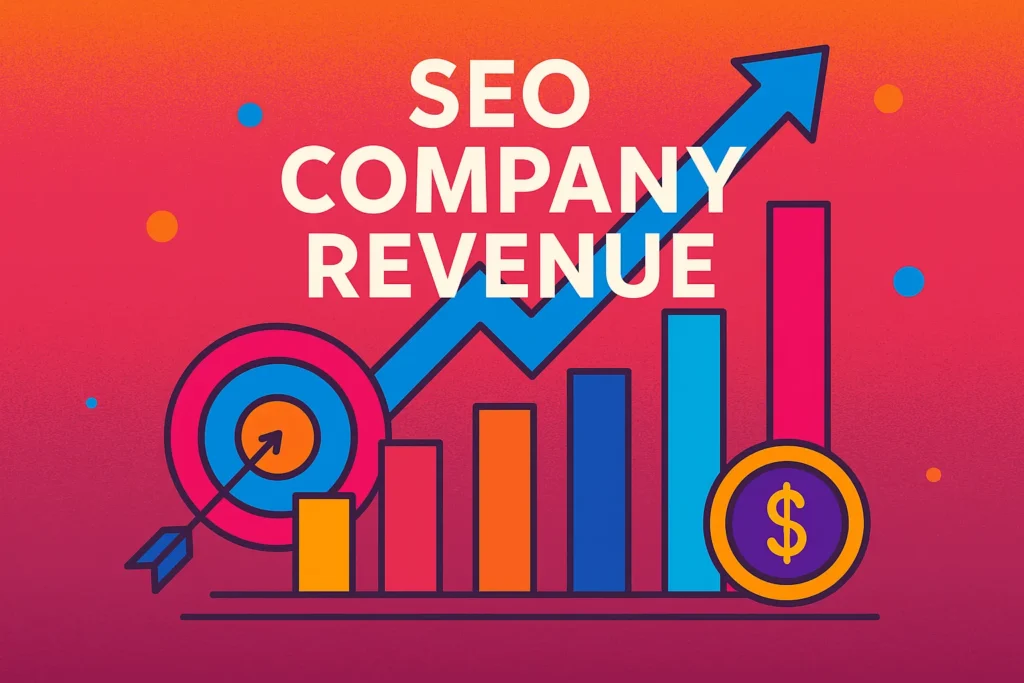
SEO company revenue refers to the total income an SEO agency or consultant earns from their services, software, products, or partnerships. This includes monthly retainers, project-based fees, consulting, training, and even passive income streams like affiliate commissions.
At its core, it’s the financial heartbeat of any SEO business — and it can vary wildly depending on your business model, pricing structure, and operational strategy.
TL;DR (Too Long; Didn’t Read)
- SEO company revenue depends on more than just client volume — pricing, retention, and efficiency play a major role.
- Profitability often comes from systems, not hustle.
- We’ll explore how to price better, upsell smarter, and use automation to maximize margins.
- Real case studies and revenue figures from across the industry back up every strategy.
- If you’re an agency owner or freelancer looking to grow your SEO business the smart way — this post is your blueprint.
Why SEO Company Revenue Isn’t Just About More Clients
When I started Vibe Branding over a decade ago, I thought revenue was a direct result of how many clients I could land. More clients meant more money, right?
I was wrong. We had busy months that felt like we were sprinting just to break even.
That’s when I realized: high SEO company revenue isn’t just about growing your client list — it’s about growing your business smart. One of the biggest turning points for us was shifting away from custom everything.
Every client wanted something different, and we tried to deliver every time. That was killing our margins and burning out our team.
We finally got serious about productizing services and setting clear scopes. The result?
Fewer revisions, happier clients, and way more predictable cash flow. It taught me that scalable revenue starts with scalable service delivery — something many SEO companies overlook.
Core Revenue Streams That Fuel SEO Agencies
Over the years, I’ve seen a wide variety of ways to generate income in the SEO industry. At Vibe Branding, we started with just basic on-page SEO and link building.
But to grow revenue meaningfully, we had to diversify. The core of SEO company revenue usually includes four big streams.
First, there’s client service work — your bread-and-butter like on-page optimization, technical audits, content planning, and backlink strategies. This is the most common source, but it’s also the most labor-intensive.
Second, you’ve got productized SEO services, which bundle specific deliverables into flat-rate packages. These are great for scaling without constantly reinventing the wheel.
Third, consulting and training has become a solid secondary revenue stream. We’ve developed in-house workshops, white-label training kits, and even one-on-one coaching sessions for newer agencies.
Finally, we started dabbling in passive income through affiliate partnerships with tools we actually use and recommend. When your recommendations convert to revenue, it’s a win-win.
Here’s a quick comparison of common SEO revenue models:
Revenue Stream | Scalable | Predictable | Setup Complexity | Avg. Margin |
Client Retainers | ✅ | ✅ | Moderate | 60–80% |
Productized Services | ✅ | ✅ | High | 70–85% |
Consulting & Training | ⚠️ | ⚠️ | Moderate | 80–90% |
Affiliate Marketing | ✅ | ⚠️ | Low | 90%+ |
We found that leaning into all four allowed us to not just grow — but to stay stable through seasonal dips.
Pricing Strategies That Maximize SEO Company Revenue
Let’s talk pricing — because if you’re underpricing your services, no amount of hustle will save your margins. In our early days, I made the mistake of charging hourly.
Not only did it anchor us to a low ceiling, but it also made clients focus more on “how long” we were working than the results we were getting. Eventually, we moved to value-based pricing. Instead of quoting by time, we started quoting based on the value we delivered — like how much traffic we could generate or how much conversion growth we expected.
This changed the game. Clients were more committed.
We earned more for the same work. Revenue climbed without adding more hours to our workload.
We also created service tiers. Bronze, Silver, and Gold packages made pricing more transparent and made upsells feel more natural.
The tier model allowed us to anchor our pricing and showcase premium value. Surprisingly, many clients didn’t want the cheapest package — they wanted the right one.
Just having a high-ticket option made mid-tier offers more appealing, which increased our average deal size. We also experimented with bundling services like content + backlinks + technical fixes into one rate.
It simplified our sales and gave clients confidence that we were handling everything. From a business standpoint, it also let us raise prices without pushback.
Client Retention: The Secret to Stable SEO Company Revenue
One of the biggest lessons I’ve learned in growing Vibe Branding is this: it’s way easier to keep a client than to get a new one. When you focus on client retention, revenue becomes predictable.
That’s how you go from feast-and-famine to true business stability. So how do you keep clients longer?
First, be proactive. Don’t wait until the client asks, “What are we paying you for?”
Show results early and often. We send monthly reports not just with data, but with insights.
We highlight wins — even small ones — and explain how they tie into long-term goals. Second, communication is everything.
A lot of agencies disappear after onboarding. We do the opposite.
We kick off with a 30-day call, then keep a tight check-in rhythm. When clients feel heard, they stay.
Third, education matters. When clients understand SEO, they’re less likely to expect overnight miracles and more likely to appreciate your process.
We created short, branded videos that explain things like “What is domain authority?” or “Why does it take 3 months to see ranking jumps?” These mini-educations reduced churn dramatically.
And lastly, we added value over time. After six months, we do a milestone review and suggest new goals — maybe a content refresh campaign or a YouTube SEO strategy.
That forward motion gives clients a reason to stick around.

Most Profitable and Scalable SEO Services We’ve Found
Not all SEO services are created equal. Some have high margins but are hard to scale.
Others are scalable but compete on price. We found the sweet spot through a mix of trial, error, and listening closely to what our clients valued most.
The most profitable service for us has been technical SEO audits. These are high-trust deliverables with clear value.
We templatized the process and trained junior team members to run 80% of the audit. That kept margins high and delivery fast.
Next up is local SEO. Businesses are hungry to dominate their geographic niche, and it’s one of the easiest SEO wins when done well.
We built packages that include GBP optimization, citation building, and location-based content. The demand hasn’t slowed down.
Content creation and strategy has also scaled well for us. By building topic clusters and hiring trained writers, we streamlined the process.
We charge by value, not word count, which lets us control quality and margin. Finally, white label SEO allowed us to grow without adding new clients directly.
Other agencies come to us to fulfill services under their own branding. We get predictable volume, and they get quality results — no extra sales required on our end.
Growing SEO Company Revenue Without Adding More Clients
At some point, every agency owner hits a wall. You can’t just keep adding clients without burning out your team or sacrificing quality.
That’s when you need to pivot your mindset: stop thinking about more clients and start thinking about more from each client. At Vibe Branding, we focused on increasing our average client value instead of chasing volume.
One of the best moves we made was creating add-ons that could be sold post-onboarding. Once trust was built, clients were more open to investing in expanded services like CRO audits, video SEO, or even branded content strategy.
We also improved our efficiency. By streamlining delivery and investing in playbooks, we shortened production timelines without reducing value.
When you reduce the hours spent per project while keeping prices stable, you effectively boost your revenue. It’s margin magic. Another huge win came from building internal SEO tools.
We developed a simple internal audit tool that pulled data from several APIs and helped us deliver better insights faster. What used to take 6 hours now takes 45 minutes.
Over hundreds of clients, that added up to serious profit. Lastly, I looked at licensing opportunities.
We packaged some of our internal templates and SOPs and offered them as a mini-course for freelance SEOs. It was a smaller revenue stream, but it had no delivery costs and brought in high-margin income every month.
Tools and Automations That Help Us Boost Margins
I’m a huge fan of tools that make life easier — but only if they actually improve delivery or cut costs. At Vibe Branding, we don’t chase shiny new platforms just because they’re trending.
We invest in what gives us ROI. For keyword research and competition analysis, we’ve relied on Ahrefs and Semrush for years.
They’re expensive, sure — but the speed and accuracy of data mean we can do 4X the research in half the time. That’s time we can spend on strategy and sales.
For reporting, we use Google Data Studio with custom dashboards. We built templates that pull data automatically from Search Console, Google Analytics, and rank trackers.
Once it’s set up, it’s hands-off and delivers clear, client-friendly reports monthly. That’s saved us dozens of hours a month.
Internally, we run projects through ClickUp and use Zapier to automate client onboarding, task assignments, and content approvals. For example, once a client signs their proposal, Zapier triggers our welcome email, creates folders, assigns tasks, and logs everything in the CRM.
We also invested in SurferSEO for content optimization. Our writers now build outlines based on real SERP data, which improves ranking speed and saves revision cycles.
The bottom line? Automation isn’t just about convenience — it’s about protecting your margins while scaling.

Upselling and Cross-Selling to Increase Client Value
One of the most underrated ways to boost SEO company revenue is to sell more to the clients you already have. If you’ve delivered results and built trust, there’s a huge opportunity to go deeper — not just wider.
Our best upsell strategy has been through quarterly reviews. Every three months, we schedule a “growth review” with each retainer client.
We look at what’s working, what’s not, and present 1–2 strategic initiatives for the next quarter. These often include services we don’t offer by default — like CRO enhancements, schema markup expansion, or multi-language SEO.
Cross-selling works best when it solves a problem. For instance, we noticed several clients had slow websites.
Instead of just pointing it out, we offered a Core Web Vitals optimization package. It wasn’t part of their SEO contract, but they were happy to pay for performance improvements.
Another favorite: adding paid media as a complement to SEO. SEO is a long game, and some clients need faster traction.
By offering PPC or paid content boosts, we satisfy their short-term goals while the long-term SEO builds up. Finally, we packaged “brand building” bundles — guest posting, podcast placement, digital PR — as an upgrade to backlink campaigns.
Clients loved the added visibility, and we increased contract values by 20–30% in many cases. The key?
Don’t upsell for the sake of revenue. Upsell to help clients reach their goals faster and more effectively.
When it’s framed that way, it almost always converts.
Mistakes That Kill SEO Company Revenue (We’ve Made Them)
Let’s be honest — most of us learn the hard way. I’ve made every revenue-killing mistake in the book, and I’m not afraid to admit it.
If I can help another SEO founder skip some of the pain, it’s worth sharing. First mistake?
Underpricing. I thought lower prices made us more competitive.
All it did was attract low-value clients and drain our resources. Once we raised our prices and tightened our scope, we made more with fewer headaches.
Second mistake? Saying yes to everything.
In the early years, we bent over backward to customize everything. But bespoke work doesn’t scale.
Now we only offer high-impact, high-margin services that fit our model. If something doesn’t align, we refer it out. Third?
Ignoring retention. Early on, we were obsessed with getting new clients.
We didn’t nurture the ones we had. Churn was high and revenue was shaky.
Now, client experience is a KPI — and it’s helped us cut churn to less than 10%. Fourth?
No tracking. For a while, I couldn’t tell you which services were the most profitable.
We fixed that by implementing project cost tracking and ROI reviews. Now we double down on what’s working and quietly phase out what isn’t.
And lastly? Not investing in the team.
We were so focused on client work that we forgot our internal growth. Training, culture, and systems were an afterthought.
Now we prioritize team development and cross-skilling, which keeps morale (and performance) high. Every one of these mistakes cost us time and money.
But they also helped us shape the business we have today.
The KPIs That Guide Our Growth
If you want to grow SEO company revenue, you need to track the right numbers. Gut feeling doesn’t cut it.
We built our dashboard around a few core KPIs that give us insight into health, scalability, and risk. First is Monthly Recurring Revenue (MRR).
This is the foundation. We want to know what’s locked in each month, so we can plan without panic.
Second is Lifetime Value (LTV). We track how long our clients stay and how much they spend.
The higher the LTV, the more sustainable our business becomes. We use LTV to justify investing more in onboarding and client experience.
Third is Client Acquisition Cost (CAC). If it costs $1,500 to get a new client who pays $2,000 total — that’s a problem.
We aim for a 3X return on CAC within 90 days. Fourth is Profit Margin per Service.
We measure how much each service actually earns us after labor and tools. Sometimes the flashy offerings aren’t worth it once the delivery cost is factored in.
Fifth is Churn Rate. We keep a close eye on how many clients cancel or fail to renew.
Our goal is to keep churn under 10%. When it creeps up, we dig into why.
Here’s a simplified view of our current targets:
KPI | Ideal Range |
Monthly Recurring Revenue | $100K+ |
Client LTV | $15K+ |
CAC to LTV Ratio | 1:3 or better |
Avg. Gross Margin | 70–80% |
Monthly Client Churn | < 10% |
Tracking these KPIs has helped us stay focused, spot problems early, and celebrate wins based on real performance — not gut feelings.
Final Thoughts Before You Scale
Growing your SEO company revenue isn’t about chasing every lead or adding 50 new services. It’s about clarity, positioning, and process.
Over the last decade, Vibe Branding has helped dozens of SEO agencies — and built our own — by focusing on value, scalability, and strong client relationships. We didn’t get here overnight.
It took years of refining our offers, tracking the right metrics, automating what we could, and learning how to make more from what we already had. That’s the real path to sustainable, scalable income in the SEO industry.
If you’re serious about increasing your SEO company revenue, start by reviewing your pricing, tightening your services, and investing in retention. Those three moves alone can transform your growth curve.
And remember — we’re not just SEOs. We’re business owners.
And smart business is what keeps the lights on, the team paid, and the vision growing.