What Is SEO Marketing Research?
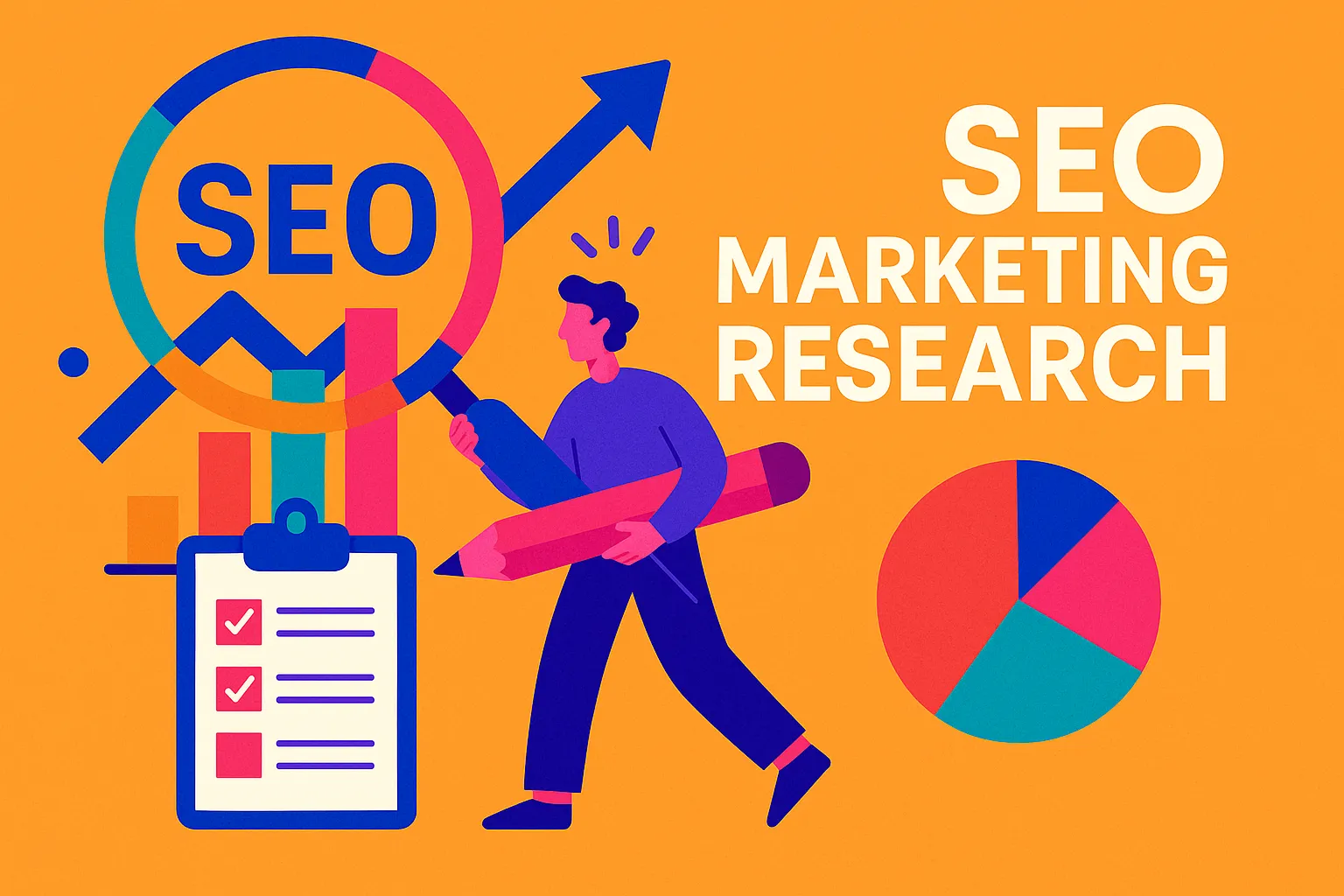
SEO marketing research is the process of gathering and analyzing data to improve a website’s visibility in search engine results. At its core, it involves researching keywords, user behavior, competitors, search intent, and market trends to create content and strategies that rank better on Google.
This isn’t just about plugging in search terms; it’s about understanding what people want, why they search, and how to position your content to meet their needs. At Vibe Branding, we use SEO marketing research to help businesses rise above the noise, no matter how competitive the industry is.
When done right, this process gives you a roadmap. Instead of guessing what your audience wants, you’re speaking directly to their intent.
The results? More visibility, better leads, and smarter marketing decisions.
TL;DR: What You’ll Learn in This Post
- What SEO marketing research is and why it’s essential for long-term business growth
- How to get started from scratch with the right tools and mindset
- My personal take from 10+ years running Vibe Branding and the biggest research wins
- Actionable strategies for keyword research, competitive analysis, and intent mapping
- Common mistakes to avoid and how often to update your research process
- A full breakdown of how user behavior and SERP data shape effective SEO strategies
- Our favorite tools, methods, and tips for validating keyword opportunities with real data
Why SEO Marketing Research Matters More Than Ever
Over the past decade, I’ve watched digital marketing evolve from a creative gamble to a data-powered science. And if there’s one practice that has never failed us at Vibe Branding, it’s SEO marketing research.
Whether we’re helping a scrappy startup or a global brand, our most sustainable wins come from knowing exactly what the audience is searching for and why. The truth is, SEO is no longer optional.
Google handles over 8.5 billion searches per day. If your business doesn’t show up when it matters most, your competitor will.
And showing up isn’t just about being seen; it’s about being relevant. That’s where SEO marketing research comes in.
It ensures that you’re not just optimizing for machines but creating a digital experience your audience actually wants to engage with. From keyword trends to content gaps and competitor insights, SEO marketing research gives you an edge.
It tells you where to invest your energy, what kind of content to create, and how to speak your audience’s language.
Starting From Scratch: My Personal Framework
When we onboard a new client at Vibe Branding, the first thing we do is assess their SEO landscape. No matter how advanced a site looks on the surface, we always start from ground zero.
Why? Because assuming is expensive.
Instead, we dive into research—not just to discover what’s working but to uncover hidden opportunities. If you’re just starting out, here’s the framework I recommend.
First, define what success looks like for your site. Is it traffic?
Leads? Sales?
Knowing the destination helps shape your path. Next, set up basic tools: Google Analytics, Google Search Console, and an SEO platform like Ahrefs or SEMrush.
Then conduct a simple audit: What keywords are you ranking for?
What content is bringing traffic? Where are you losing visitors?
Once you’ve built that foundation, it’s time to track progress. At Vibe Branding, we use dashboards and weekly reports to measure everything—because what gets measured, gets improved.
The Tools We Swear By
There’s no shortage of tools out there, but not all are created equal. After a decade in the industry, we’ve narrowed it down to a toolkit that consistently delivers real insights.
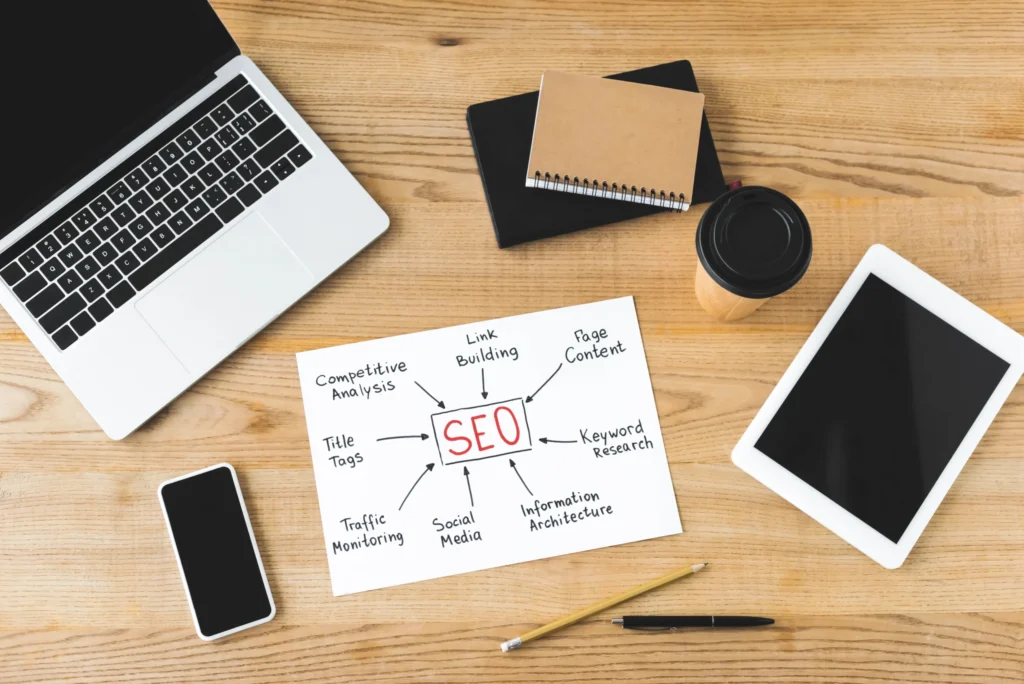
If you want to do SEO marketing research that moves the needle, you’ll need tools that cover multiple layers of data: search volume, competition, backlinks, intent, and SERP features.
Here’s a quick breakdown of what we use and why:
Tool | Purpose | Why We Use It |
Ahrefs | Keyword + Backlink Research | Great UI, deep database, accurate metrics |
SEMrush | Competitor SEO Analysis | Ideal for tracking gaps and ad insights |
Google Search Console | Search Performance | Real-time indexing and performance data |
Surfer SEO | Content Optimization | On-page SEO scoring and NLP analysis |
Keywords Everywhere | On-the-fly SERP data | Quick look at search volume & CPC |
These tools help us triangulate data so we’re not basing decisions on gut feelings. With this stack, we’re able to confirm what users are searching, how competitors are ranking, and what kind of content is missing from the conversation.

The Art of Competitive SEO Analysis
One of the most eye-opening parts of SEO marketing research is competitor analysis. Early on at Vibe Branding, we learned that your biggest threat might not be who you think it is.
Your organic competitors aren’t always the ones you compete with in sales; they’re the ones stealing your SERP real estate. We start by identifying who owns top positions for your target keywords.
Then we dissect their content: What topics do they cover? How long is their content?
Do they use video, images, or infographics? Are their headlines optimized for click-throughs?
We look at metadata, internal linking, and even social shares. Once we understand their strategy, we don’t copy it—we beat it.
We look for weak spots they’ve ignored or go deeper on the same topic with better research and storytelling. The idea isn’t just to rank; it’s to deserve to rank by delivering better value.
Keyword Research Meets Content Gap Goldmines
I’ll admit—this is my favorite part of SEO marketing research. Keyword discovery is where creativity meets precision.
At Vibe Branding, we treat keywords as customer signals. Every search term is a window into what someone wants, fears, or is curious about.
And when you find the right keyword at the right time? That’s magic.
Our research starts broad: we use Ahrefs and Google Trends to identify big-picture patterns. Then we go granular. We look for long-tail keywords with high intent and low competition.
These often lead to niche blog posts, resource pages, or new product categories that no one else is targeting. We also do gap analysis: comparing your keyword footprint to competitors.
This helps uncover missed opportunities. For example, if your rival is ranking for “best CRM tools for nonprofits” and you’re not even touching that angle—that’s a content gap you can fill.
Better yet, fill it with real case studies and statistics to boost authority.
Understanding Search Intent Like a Human, Not a Bot
Search engines have gotten smarter, but so have searchers. That’s why understanding search intent is at the heart of SEO marketing research.
It’s not enough to rank for a keyword; you have to match the reason someone searched in the first place. Let me give you a quick story.
A few years back, we helped a health brand trying to rank for “best protein powder.” They had a decent article, lots of keywords, even some backlinks.
But it wasn’t ranking. Why?
Because their content didn’t match the user’s intent. People wanted side-by-side comparisons, ingredient breakdowns, and expert reviews.
We rebuilt the page around that intent, and in under three months, they were on page one. The lesson?
Intent beats volume. Before you create a single word of content, ask: is this keyword informational, navigational, transactional, or investigational?
Your content structure, CTA, and even media choices should reflect that intent.
It’s how we turn visits into conversions.
The Secret Sauce: SERP + User Behavior Data
Want to know what your audience actually cares about? Look at the SERPs. Google shows you everything: featured snippets, People Also Ask, knowledge panels.
This is search intent in action. One of our go-to techniques is reverse-engineering SERPs.
We check what type of content is ranking (videos, listicles, guides) and what questions Google suggests. Then we build content that answers those questions more clearly, more visually, and more authoritatively.
But we don’t stop there. We pair that with user behavior data.
Using Hotjar, we see where people click, where they scroll, and where they bounce. This helps us refine content layouts, tweak headlines, and move key info higher up the page.
SEO marketing research isn’t just about keywords; it’s about user experience. And the better the experience, the longer people stay—which tells Google your content is worth ranking.
Validating Keyword Opportunities with Real Data
Back when I first started Vibe Branding, I relied a lot on instinct. I had a good feel for what topics would rank—but when we began digging into performance data, it changed everything.
Now, before we even begin writing, we validate every SEO opportunity with cold, hard numbers. It’s one of the most critical parts of SEO marketing research.
We use tools like Ahrefs and SEMrush to measure keyword volume, difficulty, CPC, and SERP competition. But we also go deeper.
We look at keyword trends over time. If a term is seasonal or in decline, it might not be worth building a whole strategy around.
We also evaluate how keywords are performing on competitors’ pages. If their content is getting tons of backlinks or engagement, that signals real audience interest.
Another strategy we use is content testing. We’ll create a smaller blog post targeting a long-tail keyword and monitor its performance over 60 days.
If it gains traction, we double down by expanding it into a full guide, infographic, or video series. SEO marketing research isn’t static—it’s iterative. The more we validate early, the more confident we are when scaling campaigns.
The Pitfalls: What NOT to Do in SEO Marketing Research
Even experienced marketers make mistakes in this space. I’ve made plenty myself.
Early in my career, I once spent months optimizing for high-volume keywords without considering whether they were relevant to my client’s actual audience. The traffic came—but conversions didn’t.
That experience taught me to prioritize quality over volume. A common mistake is chasing keywords without considering search intent.
Ranking for the wrong phrase can hurt your bounce rate and tank your user signals. Another pitfall is relying solely on tools.
Don’t get me wrong—I love a good keyword report. But no tool can replace human judgment.
You need to think about your brand voice, your audience’s mindset, and your content’s real-world value. Also, beware of stale data.
Google’s algorithm changes constantly. If you’re using keyword lists from six months ago, you’re already behind.
At Vibe Branding, we’ve built internal systems to refresh our keyword sets and content maps quarterly. This keeps us nimble, especially in fast-moving industries like tech, fashion, and wellness.
Lastly, don’t forget your backend. Even the best research falls flat if your technical SEO isn’t solid.
That means clean site architecture, fast load times, and mobile responsiveness. You wouldn’t pour fine wine into a cracked glass—so don’t pour great content into a broken site.

How Often Should You Update Your SEO Marketing Research?
This is one of the most overlooked questions in our field. Many businesses treat SEO research like a one-and-done task.
But let me tell you from experience: the web doesn’t stand still—and neither should your strategy. At Vibe Branding, we run SEO audits and keyword updates every quarter.
For fast-changing verticals like finance or ecommerce, we do it monthly. Trends shift.
Competitors change tactics. Google updates its SERP features.
If you’re not updating, you’re falling behind. We also use micro cycles.
After a new blog post goes live, we monitor it for the first 30–60 days. If it underperforms, we rework the title, meta description, or subheaders.
Sometimes, even adding an FAQ block or restructuring the intro can boost rankings. SEO marketing research doesn’t stop when you hit publish—it evolves with your audience’s behavior.
Updating regularly also keeps your team aligned. It informs what new pages to build, what old content to refresh, and which topics to promote on social media.
It’s not just SEO—it’s the backbone of your entire digital strategy.
Final Thoughts: Research That Drives Results
After a decade in the game, if there’s one thing I know, it’s this: data-driven SEO marketing research separates brands that rank for a month from brands that dominate for years. At Vibe Branding, we’ve built our reputation on results—not shortcuts.
Our clients trust us because we don’t guess—we dig. We analyze, test, and validate every decision with a mix of creativity and precision.
The beauty of SEO marketing research is that it empowers you. Whether you’re a startup founder, a marketing director, or a solopreneur, the insights you gain can guide every piece of content, every product page, and every digital campaign you launch.
It’s not just about pleasing Google—it’s about serving your audience better than anyone else in your space. So if you’re ready to outsmart—not outspend—your competitors, start here.
Set up your tools. Audit your content.
Map out your keywords. And remember, great SEO starts with great research.
We’ve seen it work for our clients, and we’ve seen it transform our own brand. That’s the power of smart, sustained SEO marketing research.
And that’s what we do every day at Vibe Branding.