What Does “SEO Strategy Full Form” Mean?
The SEO strategy full form is Search Engine Optimization strategy—but it’s more than just a long-winded phrase. At its core, it’s a game plan that helps your website show up on Google and other search engines for the right searches.
You’re not just tossing in keywords and hoping something sticks. A strategy means you’re thinking intentionally: Who are you trying to reach?
What are they typing into Google? What pages are they landing on?
How are they engaging with your content? At Vibe Branding, we’ve been building SEO strategies for over a decade, helping clients across industries rise to the top of Google.
We’ve learned that a real SEO strategy isn’t about tricks or hacks—it’s about building a smart, user-first experience that search engines trust. And if you stick with me through this post, I’ll show you how to do exactly that.
TL;DR Summary
- SEO strategy full form = Search Engine Optimization strategy
- Learn what a real SEO strategy includes and why it matters
- We break down on-page, off-page, and technical SEO in simple terms
- We share tips on how to start building a winning SEO plan today
- You’ll learn the top tools, mistakes to avoid, and what success looks like in different industries
- This guide is packed with lessons from 10+ years of experience at Vibe Branding
Why an SEO Strategy Matters More Than Ever
Let me paint a picture for you. Imagine launching a beautiful website—sleek design, great copy, cool images.
But no one finds it. No clicks.
No traffic. That’s what happens without an SEO strategy.
You might have the best product or story, but it won’t matter if people can’t find you. The reality is, organic search still drives the majority of traffic for most websites.
Google processes over 8.5 billion searches per day. If you’re not showing up in those results, you’re leaving money—and visibility—on the table.
A solid SEO strategy acts as a roadmap, ensuring every piece of content, every image, and every URL works toward the same goal: more relevant traffic and better conversions. At Vibe Branding, we’ve seen brands increase their organic traffic by up to 300% just by focusing on a clear, structured strategy.
It’s not overnight magic, but it works. In fact, a client in the beauty space saw a 120% rise in leads within six months after implementing a basic SEO plan.
What’s Actually in an SEO Strategy?
If you’re wondering what goes into a real strategy—not just SEO tasks here and there—let me break it down from my own experience. There are three key parts: technical SEO, on-page SEO, and off-page SEO.
Let’s unpack them. Technical SEO is your site’s foundation.
It’s how well your site is structured so that Google can crawl and index it. At Vibe, we use tools like Sitebulb and Screaming Frog to run full technical audits.
We check site speed, mobile-friendliness, secure HTTPS protocols, clean sitemaps, and schema markup. One client had 40% of their pages blocked from indexing—and they didn’t even know it.
Fixing that doubled their search visibility. On-page SEO is what users and Google both see—your actual content, keywords, headlines, meta titles, and internal links.
We focus hard on making sure content aligns with search intent. If someone searches “how to fix a leaky faucet,” they don’t want a product page—they want a step-by-step guide.
That’s the kind of nuance that separates content that ranks from content that flops. Off-page SEO is about building authority.
Think backlinks, social signals, brand mentions. We help our clients get featured in publications, directories, and even on podcasts.
It’s not about spammy link exchanges. It’s about trust—because Google values what other trusted sources say about you.
These three layers work together. If one is weak, the whole structure can fall apart.
That’s why we treat SEO like an ecosystem, not a checklist.
The Five Ingredients of a Great SEO Strategy
From our years in the trenches, these five elements are always part of a winning SEO strategy:
- Clear Goals: Are you looking for traffic, leads, sales, or brand awareness? We always define KPIs before writing a single line of content.
- Target Audience Insight: We research who your users are, what they’re searching for, and how they interact with search engines.
- Keyword Strategy: We map keywords to content types—transactional keywords go on product pages, informational ones on blog posts.
- Content That Solves Problems: We write to answer questions, not just rank. The content has to help someone do something.
- Consistent Optimization: SEO isn’t a one-and-done job. We revisit content quarterly, improve internal links, and watch the competition.
At Vibe Branding, we’ve worked with ecommerce stores, service providers, and thought leaders—and this framework always delivers.
How to Start Building Your Own SEO Strategy
If you’re new to SEO, I get it—it can be overwhelming. But here’s how I guide beginners:
Start with keyword research. Use Google’s Keyword Planner or Ubersuggest to find what your audience is searching for.
Then look at the intent behind the search—is it informational, transactional, or navigational? Next, do a content audit.
What pages already exist? Are they optimized for a keyword?
Do they answer real questions? Then comes the technical check.
Is your site mobile-friendly? Do your pages load fast?
Is there a sitemap submitted in Google Search Console? From there, create a content plan.
At Vibe, we plan at least 3 months out. That might be a mix of blog posts, landing pages, or even updating older pages.
Finally, start tracking. Use Google Search Console and Analytics to see what’s working.
Tweak, test, and repeat. That’s how you win.
The Biggest SEO Strategy Mistakes I See (and How to Avoid Them)
Over the years, I’ve seen so many businesses fall into the same SEO traps. The first is chasing trends without a solid plan.
Maybe a new tactic goes viral—like optimizing for AI search snippets—and suddenly everyone’s jumping on it without knowing if it actually helps their audience. Don’t get me wrong, innovation is great.
But if your site doesn’t have the basics down, you’re building on a shaky foundation. Another mistake is focusing too much on keywords and not enough on the user.
Stuffing a blog post with your target keyword isn’t going to work anymore. Google’s smarter than that.
It wants to see helpful content that answers a user’s question naturally. One of our clients had 30 blogs all targeting the same keyword—none of them ranked.
We merged and rewrote them into one helpful guide, and within 60 days, they hit the first page. I’ve also seen people forget about updating their strategy.
SEO is not static. Google’s algorithm is changing, your competitors are improving, and your audience’s behavior evolves.
You need to check your site every quarter at minimum, and update your strategy at least twice a year. At Vibe Branding, we include that in every client’s roadmap.
Lastly, skipping technical SEO is a killer. I’ve worked with amazing writers who had great content, but their sites were so slow and poorly structured that Google couldn’t even crawl the pages.
Without a healthy technical setup, your content doesn’t stand a chance.
How On-Page, Off-Page, and Technical SEO Work Together
Let me share a quick story. One of our B2B clients was only focused on content.
They had detailed blog posts and solid keyword coverage. But their traffic was flat for months. After an audit, we found that their internal linking was weak, they had no backlinks, and their site speed was underperforming.
We added schema, sped up the site, built a few key links—and boom, traffic started climbing in just four weeks. That’s the power of balance.
On-page SEO brings the relevance, off-page SEO builds trust, and technical SEO ensures accessibility. When all three work together, Google has everything it needs to rank your site higher.
If your site is a house, think of on-page SEO as the furniture and layout, technical SEO as the plumbing and wiring, and off-page SEO as your reputation in the neighborhood. You need all three for the house to be livable—and to get the neighbors talking.
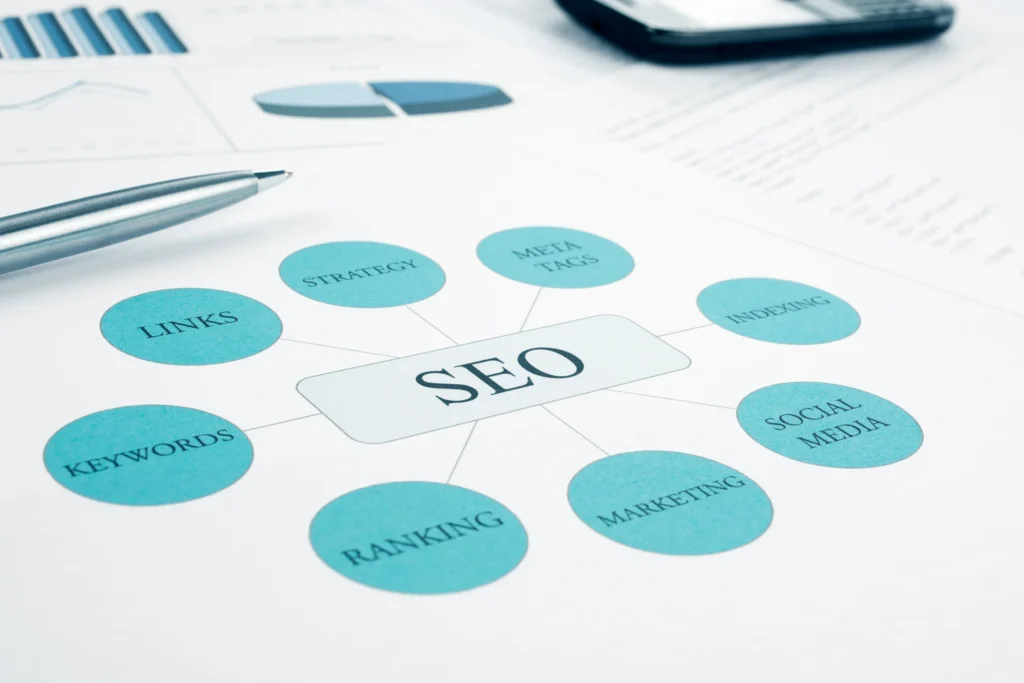
How Often Should You Update Your SEO Strategy?
At Vibe Branding, we treat SEO like a living system. It grows, adapts, and sometimes needs pruning.
One of the most common questions we get is: “How often should we change our SEO strategy?” The answer?
As often as needed, but at least quarterly. Every three months, we run a performance report for clients.
We look at rankings, traffic changes, bounce rates, time on page, and conversion paths. If something’s underperforming, we dig into why.
Maybe the search intent changed. Maybe a competitor outranked us with a better piece of content.
Whatever the case, we don’t sit still. When Google drops an algorithm update—which can happen several times a year—we review our strategies immediately.
If there’s a major update (like the Helpful Content Update), we reevaluate every page on the site for quality. We also encourage regular updates to evergreen content.
If your blog post from 2021 is still driving traffic, great! But it better not have outdated stats or broken links.
Freshness matters, and Google rewards it.
The Best Tools for SEO Strategy Implementation
You don’t need a hundred tools to do SEO right, but you do need the right ones. At Vibe Branding, we’ve tested just about everything.
Here are the tools we rely on most:
- Google Search Console: This is non-negotiable. It tells you how your pages are performing, what queries are driving clicks, and if there are any crawl issues.
- Google Analytics 4: Helps us understand user behavior—like where people drop off and what converts best.
- SEMrush: This is our go-to for keyword research, competitive analysis, and backlink tracking.
- Screaming Frog: A technical audit tool we use to check crawlability, duplicate content, and more.
- AnswerThePublic: Great for uncovering real questions people ask related to your niche, which fuels blog ideas.
We also create custom dashboards for clients that combine these tools into one view. This makes it easier to track KPIs without getting overwhelmed by data.
Here’s a quick table showing how we use these tools daily:
Tool | Main Use | Frequency Used |
Google Search Console | Monitoring site health & ranking data | Daily |
SEMrush | Keyword tracking, competitor insights | Weekly |
Screaming Frog | Deep technical audits | Monthly |
GA4 | Behavior and conversion tracking | Daily |
AnswerThePublic | Blog content ideation | As needed |
Having the right tools isn’t about having the most. It’s about knowing how to use what you’ve got.
Examples of SEO Strategies That Actually Work
Let me tell you about a few clients we’ve helped through tailored SEO strategies—each in a different industry, but all using the same strategic foundation. We worked with a local home services company in Long Island that was struggling to appear for searches like “emergency plumber near me.”
After auditing their website, we realized they had no location-specific landing pages. We helped them build out individual pages for each neighborhood they served, optimized with hyper-local keywords and reviews.
Within three months, they ranked on the first page for over 30 local searches and saw a 78% increase in calls. Another example is a national ecommerce client selling eco-friendly products.
Their product pages were okay, but their blog content was almost nonexistent. We launched a content hub targeting questions like “how to reduce plastic use” and “eco-friendly kitchen swaps.”
We used the SEO strategy full form framework, mapping keywords to specific user intents. This traffic snowballed over time and now drives over 60% of their organic revenue.
A third client in the healthcare space had over 150 blog posts with no internal linking. We implemented a structured internal linking system, connecting related content and optimizing anchor text.
Combined with new schema and technical clean-up, their average session duration doubled—and conversions from organic traffic rose by 45%. No matter the industry, the playbook is consistent: understand your user, map out your content plan, get the technical structure in place, and earn credibility through helpful content and smart backlinks.
How We Apply the SEO Strategy Full Form at Vibe Branding
If you’ve made it this far, you’ve probably noticed I keep using the term SEO strategy full form. That’s not just for Google’s sake—it’s because we believe in the full form of a strategy, not just tactics.
At Vibe Branding, our clients don’t get quick-fix SEO services. They get custom, research-driven roadmaps designed for long-term results.
When we build an SEO strategy, it starts with a discovery phase. We talk with the client, look at their audience, comb through the data, and run a complete technical audit.
Then we create a strategy document that covers their goals, content needs, keyword targets, technical priorities, and link-building opportunities. But we don’t stop there.
We implement the plan in phases—starting with technical fixes, followed by content development, then outreach. Every step is tracked, reviewed, and adjusted based on results.
We use that same process for Vibe Branding’s own website, which is how you found this article in the first place. Our site ranks for competitive digital marketing terms because we live by the same principles we teach.
That’s the power of practicing what we preach.
Planning Content Around User Intent (Not Just Keywords)
When someone searches a term, they’re not just typing words—they’re asking a question, expressing a need, or trying to solve a problem. That’s why understanding search intent is the secret weapon behind any winning SEO content strategy.
We don’t just look at search volume. We ask: “What does this person actually want?”
That’s where the SEO strategy full form makes a difference. It forces you to plan your pages based on user expectations.
Informational searches like “how to build an email list” require detailed guides. Transactional searches like “buy email marketing software” need landing pages with features, CTAs, and comparisons.
We train our writers to think in terms of journeys. What’s the first question someone has?
What’s the next? How can we guide them through the funnel while giving real value at every step?
This is how we turn blog readers into leads—and leads into clients.
Image Optimization and Visual Search: The Next SEO Frontier
Search isn’t just about words anymore. At Vibe Branding, we’re now helping clients optimize their visual content for Google Image Search and even voice assistants.
That means writing good alt text, placing images near relevant text, and using descriptive file names. It also means compressing images to improve page load speed—because slow pages don’t rank.
Here’s something we’ve learned from optimizing hundreds of images: even one well-optimized image can drive thousands of clicks if it ranks in image search. For a lifestyle client, we optimized a set of product images with strategic alt tags and placed them in a visually-rich blog post.
That post now drives more traffic from image search than regular search. We use this strategy for ourselves too.
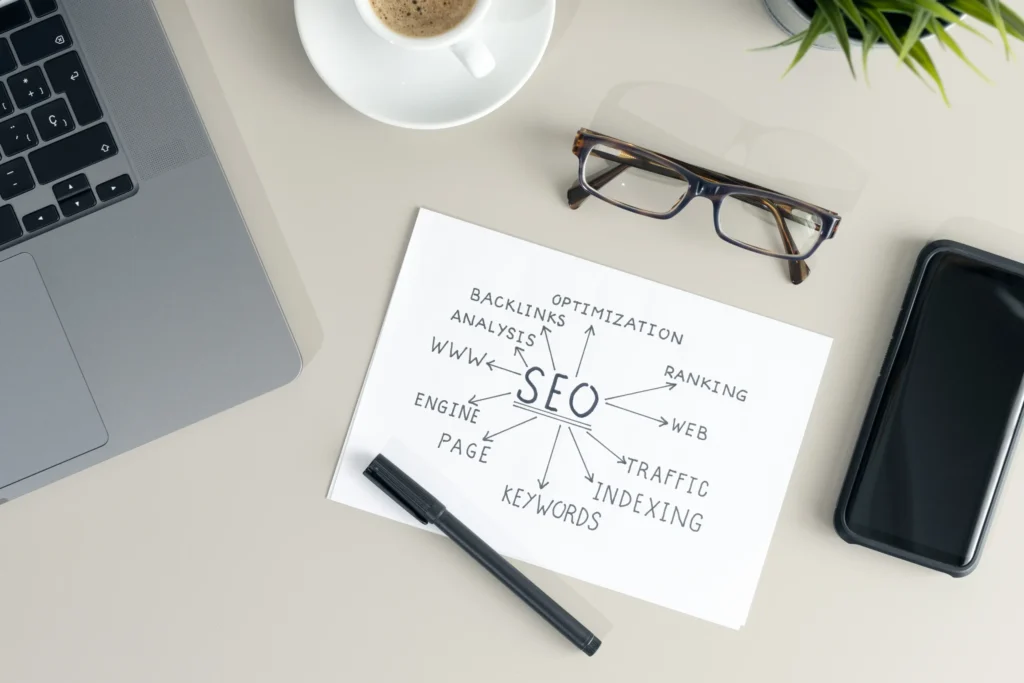
The header image on this blog post? It was created with search in mind—optimized filename, compressed, and tagged to match the keyword seo strategy full form.
Promoting Your Content the Right Way
Too many people hit publish and wait. But without promotion, even the best SEO content can get buried.
At Vibe Branding, we treat every content launch like a product launch. We share the post across social media, run it through our newsletter, and often support it with light outreach or guest post linking.
Promotion builds visibility, gets you backlinks, and feeds Google signals that your content is worth noticing. But we avoid spammy promotion tactics.
Instead, we focus on value exchanges: can we write a helpful guest post, contribute to an expert roundup, or partner with a niche influencer? That approach has helped us land features on podcasts, blogs, and even news publications.
We also coach clients on how to share their content within their networks. Your blog post might be helpful for someone on LinkedIn or in a Slack group.
That kind of engagement can drive qualified traffic and help your brand grow.
Final Thoughts
As a CEO who’s spent 10+ years in this space, I can confidently say this: SEO is one of the most powerful tools a brand can use—but only if it’s done right. The SEO strategy full form isn’t about shortcuts or hacks.
It’s about building trust with users and with search engines. It’s about showing up consistently, with quality, with intent, and with clarity. This blog post isn’t just content—it’s an example of how we apply these principles in real time.
From the keyword strategy to the structure, from the storytelling to the tools we recommend—it’s all part of the bigger picture. Whether you’re a startup, a freelancer, or a legacy brand, your SEO strategy deserves more than guesswork.
It deserves data, creativity, and an experienced hand. That’s what we bring at Vibe Branding.