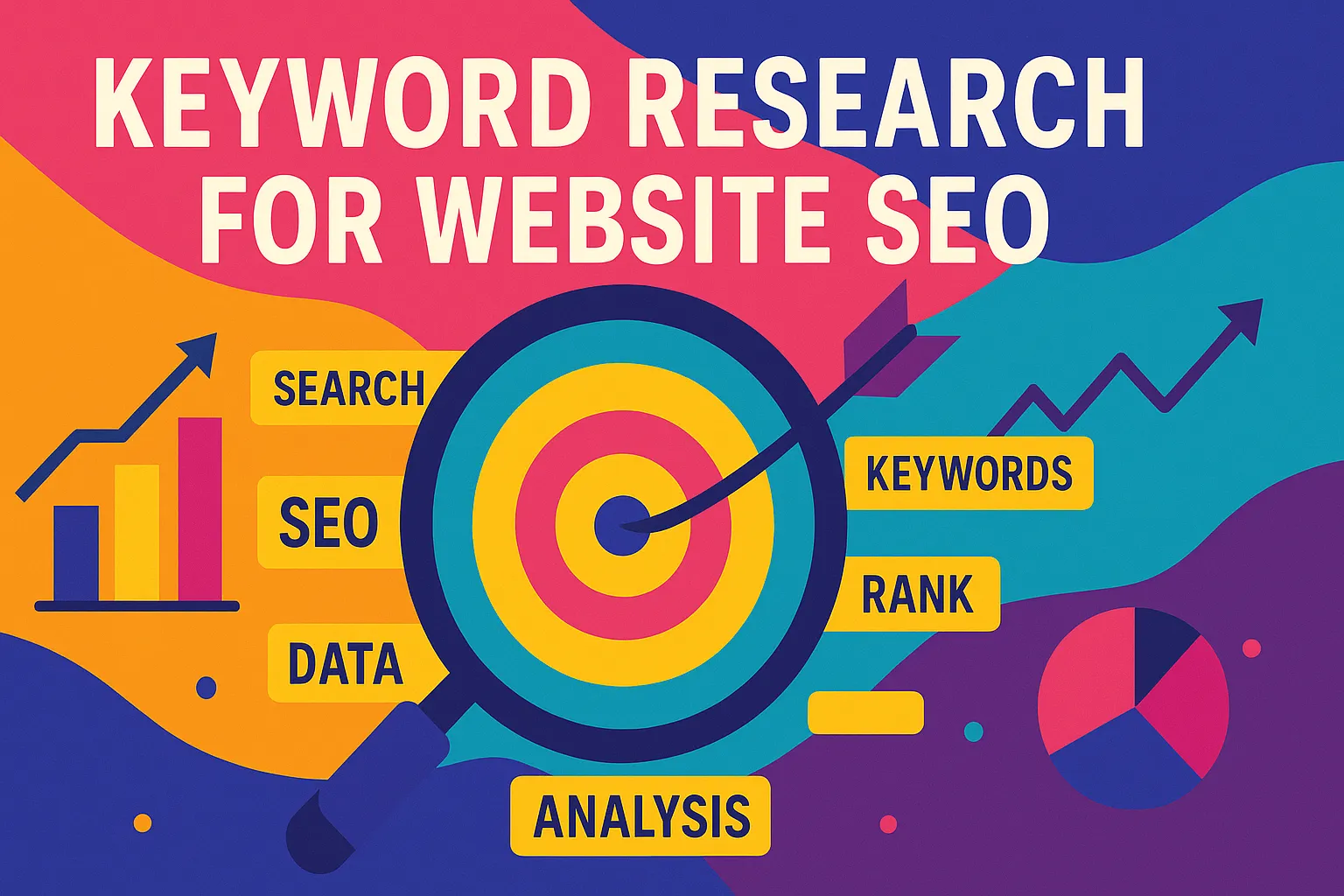
What is Keyword Research for Website SEO?
Keyword research for website SEO is the process of finding the words and phrases people are typing into search engines so you can create content that shows up in those search results. Sounds simple, right?
But trust me, after more than a decade of doing this for dozens of brands, I’ve seen just how powerful (and misunderstood) this process can be. It’s not just about picking popular words; it’s about understanding your audience, the market, and how those words actually convert into real business.
At Vibe Branding, we always tell clients: keyword research isn’t about traffic. It’s about targeted traffic.
Let’s say you own a bakery. Would you want someone looking for “cake recipes” or “custom birthday cakes near me”?
One is a hobbyist; the other is a paying customer. That difference is why keyword research is so important for your website SEO.
When done right, it helps you attract people who are looking for exactly what you offer.
TL;DR: Keyword Research for Website SEO
- Learn what keyword research really is and why it’s still a game-changer for SEO
- Discover how search engines use keywords to rank your site
- Understand keyword types and when to use them
- Get our take on the best keyword tools we’ve tested at Vibe Branding
- Use our process to find what your customers are actually searching for
- Avoid rookie mistakes like keyword cannibalization or over-optimizing
- Build a smart keyword map to fuel long-term SEO success
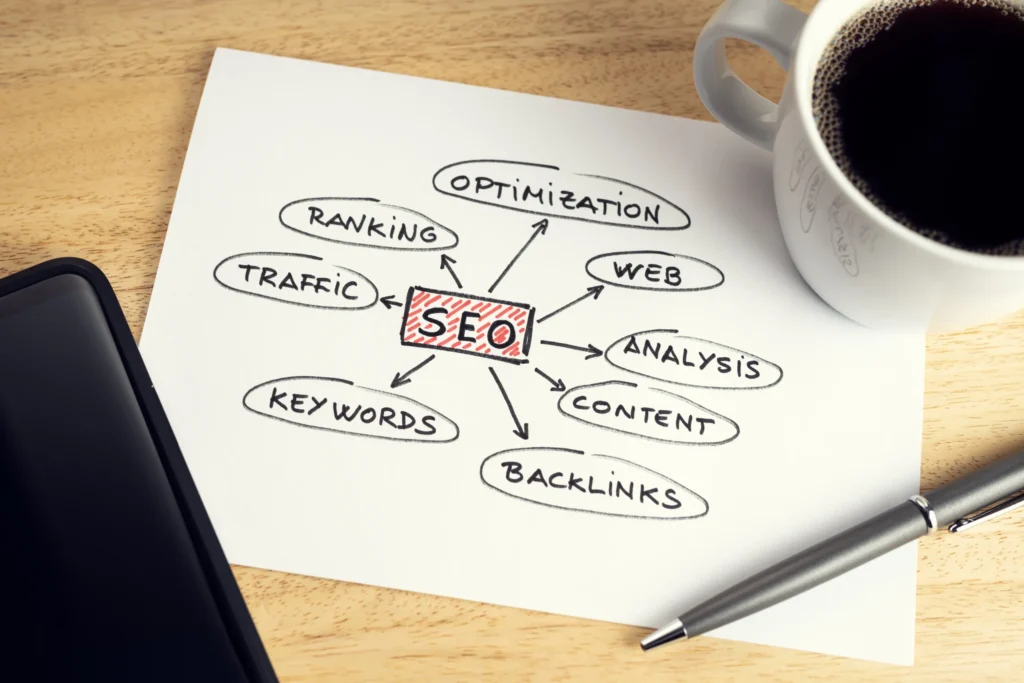
How Search Engines Use Keywords
In the early days, Google’s bots would just crawl a site and match the words in a search to the ones on your page. But today, it’s much smarter than that. It looks at context, synonyms, search intent, and even how users engage with your content after clicking.
So, if someone searches “how to fix a leaky faucet,” Google expects to show them a helpful guide with images, steps, maybe even a video—not just a bunch of words stuffed into a blog post. That means where and how you use your keywords matters.
You need them in your headlines, in your meta tags, in your image alt text, and naturally throughout your content. But don’t overdo it.
We once had a client come to us who used their main keyword 42 times on a single page. It didn’t rank at all.
Once we rewrote it with user experience in mind—and used the keyword 6 times—it climbed to page one in less than a month. Google’s goal is always relevance.
It wants to send people the best answer. So the question is: are you the best answer for your keyword?
If not, your SEO won’t work no matter how many times you use that term.
Types of Keywords and How We Use Them
There are many types of keywords we consider during our strategy sessions at Vibe Branding. We split them into categories: short-tail, long-tail, branded, product-focused, and intent-driven.
Each has its own place in your content strategy. Short-tail keywords are usually just one or two words, like “branding” or “shoes.”
They get a ton of traffic, but they’re super competitive. Long-tail keywords are longer phrases like “affordable running shoes for women,” and while they get fewer searches, they often convert better because they’re so specific.
We love long-tail keywords for new businesses or niche markets. Branded keywords include your business name or product name—these are gold when people already know you.
And intent-driven keywords are grouped by what the user wants to do: learn, buy, compare, or find. The better you match content to keyword intent, the better your SEO will perform.
We build what we call “intent stacks” that map each keyword to a part of the customer journey.
Keyword Type | Example | Use Case |
Short-tail | “running shoes” | High traffic, low conversion |
Long-tail | “best running shoes for flat feet” | Lower traffic, high conversion |
Branded | “Vibe Branding agency” | Brand visibility, loyalty |
Informational | “how to do keyword research” | Blog posts, guides |
Transactional | “buy Nike running shoes” | Product or landing pages |
When we did research for a local Long Island florist, we found that “flower preservation tips” brought in clicks but not sales. On the other hand, “same day flower delivery long island” had lower traffic but brought in 3X more revenue.
That’s the power of picking the right type of keyword.
Tools We Actually Use to Find Keywords
After 10+ years in the SEO space, we’ve tested just about every keyword tool under the sun. Some are great for deep research, while others are better for quick ideas.
Here’s what we use most often:
- Google Keyword Planner: Still a favorite, especially for local and PPC research. Great for basic volume data.
- Semrush: It’s a beast. We use it for competitor gap analysis, keyword clustering, and rank tracking.
- Ubersuggest: Ideal for small businesses who want a budget-friendly way to start.
- Keywords Everywhere: Great for seeing keyword data right in your browser as you search.
These tools give us data on volume, difficulty, cost-per-click, and even search intent. But data alone isn’t enough.
You need to know how to interpret it. That’s where experience comes in.
A keyword may look great on paper, but if it doesn’t align with your business model or customer journey, it won’t move the needle. And honestly?
We still use old-school methods too. We look at what people ask in Google Autocomplete, Reddit threads, and even listen to sales call transcripts.
If a client’s customer keeps asking the same question, you better believe we’re researching it as a keyword opportunity.

Finding What People Are Actually Searching For
At Vibe Branding, one of our golden rules is: don’t just guess what people are searching for—prove it. We start every campaign with customer interviews, surveys, and by digging into Google Search Console.
This tells us what real users are already typing in to find you. For example, a client in the health tech space thought their audience was searching for “patient engagement software,” but the data told a different story.
Most of their traffic came from long-tail searches like “how to remind patients of appointments by text.” So we shifted the strategy, created content around those phrases, and traffic doubled in under six months.
We also check the SERPs manually. That means actually searching for your keyword and seeing what Google shows.
Are the top results blog posts, landing pages, or YouTube videos? That tells you what kind of content Google favors for that keyword—and it helps you build content that fits.
Search intent is everything. You can rank #1 for a keyword and still get no clicks if the intent doesn’t match what your page offers.
That’s why keyword research for website SEO must include intent analysis. Always.
Avoiding Common Keyword Pitfalls
There are a few traps we see clients fall into again and again. One is chasing keywords with huge search volume and ignoring the smaller, more targeted phrases.
The other big one? Keyword cannibalization. That’s when multiple pages on your site are trying to rank for the same term—and they end up competing with each other.
We once worked with an eCommerce store that had six different pages all trying to rank for “organic skincare.” None of them ranked well. Once we consolidated them into a single, optimized pillar page, traffic jumped 63% in 30 days.
Less can be more in SEO if it’s strategic. Another common issue is over-optimization.
Using your keyword 20 times in a blog post won’t help. In fact, Google will likely penalize you.
We aim to use our focus keyword 5 to 7 times in a natural, contextual way throughout the post. (Like we’re doing right now with “keyword research for website SEO.” See what I did there?)
Building Your Keyword Map for Long-Term SEO
Once you’ve done the research, it’s time to organize. We use keyword mapping to align every keyword to a specific page or piece of content.
This ensures there’s no overlap and that each keyword has a clear purpose. We build out a Google Sheet that includes:
- Keyword
- Search Intent (Informational, Transactional, etc.)
- Target URL
- Content Type (Blog, Landing Page, Product Page)
- Notes
This map becomes the backbone of your content strategy. It shows you where the gaps are, which topics need supporting content, and how to build internal links that boost your authority.
For bigger clients, we build out full topic clusters with pillar pages and 10–12 sub-pages each.
When we mapped content for a SaaS client using this method, their site structure became laser-focused. Their bounce rate dropped, average session time increased, and their domain authority started climbing steadily.

Smart Keyword Usage: Where to Put Your Keywords
Let’s talk about practical placement. Once you’ve identified your keywords, where exactly should you put them to get SEO value without being spammy?
We place keywords in five key locations: title tag, meta description, H1 header, first 100 words, and at least one subheading. These are what we call “anchor placements.”
But what truly matters is the context around those keywords. Google wants to see that your content answers the searcher’s question, not just that it includes the keyword.
So yes, put “keyword research for website SEO” in the headline, but also explain what it means, how to do it, and why it matters—like we’re doing in this post. We also recommend using related phrases and synonyms.
For instance, in this blog we’ve mentioned tools, intent, mapping, long-tail strategy, and on-page optimization. All of these relate to the main topic and help signal topical authority.
When to Review and Refresh Your Strategy
Keyword trends change, your products evolve, and so do user behaviors. That’s why we recommend reviewing your keyword strategy at least once a quarter.
If you’re in a fast-moving industry like tech or fashion, do it monthly. Some signs it’s time for a refresh?
Rankings drop for no clear reason, you’re seeing declining CTRs in Google Search Console, or you’ve launched a new product line. Each of these means your keyword map needs to evolve.
We had one client in the e-learning space who stuck to a fixed keyword list for over a year. When we came in, we found dozens of new questions their audience was searching for thanks to the rise of AI in education.
Updating their strategy led to a 40% increase in organic leads in just 60 days.
Final Word: Keyword Research Is the Foundation of Long-Term SEO
At Vibe Branding, we don’t treat keyword research like a checklist. We treat it like a strategy.
It’s the DNA of all content and technical SEO we build. From blog articles to full-site audits, it all starts with understanding the language your audience uses.
If you’ve read this far, you’re already ahead of most marketers. You now understand that keyword research for website SEO isn’t just about search volume—it’s about connecting your brand with the right people at the right time.
Start simple. Start strategic.
And if you want help, well, you know where to find us. Let’s build SEO that actually works.