Introduction: Why SEO Still Drives Business Growth in 2025
Over the last 10 years running Vibe Branding, I’ve seen marketing tactics come and go, but SEO has remained the constant driver of long-term business growth. That’s not because it’s easy — it’s because it works when done right.
In 2025, companies using SEO aren’t just fighting for the first spot on Google, they’re fighting for relevance in a search environment that’s being reshaped by AI, voice search, and zero-click results. I’ve worked with local businesses, national brands, and global enterprises, and the pattern is always the same: the companies that invest early and stay consistent with SEO build an unshakable presence in their market.
They aren’t just chasing clicks; they’re building trust. That’s why when I sit down with a client who’s serious about growth, SEO is always part of the conversation from day one.
TL;DR
- SEO isn’t dead — it’s evolving faster than ever, and companies using SEO in 2025 are winning in every industry.
- Search engines rank websites based on relevance, trust, and user experience — not just keywords.
- Organic SEO leads are more cost-effective and higher quality than leads from paid ads.
- Long-term SEO investments compound over time, making them more valuable than one-off campaigns.
- The right mix of in-house expertise and agency support drives faster, measurable results.
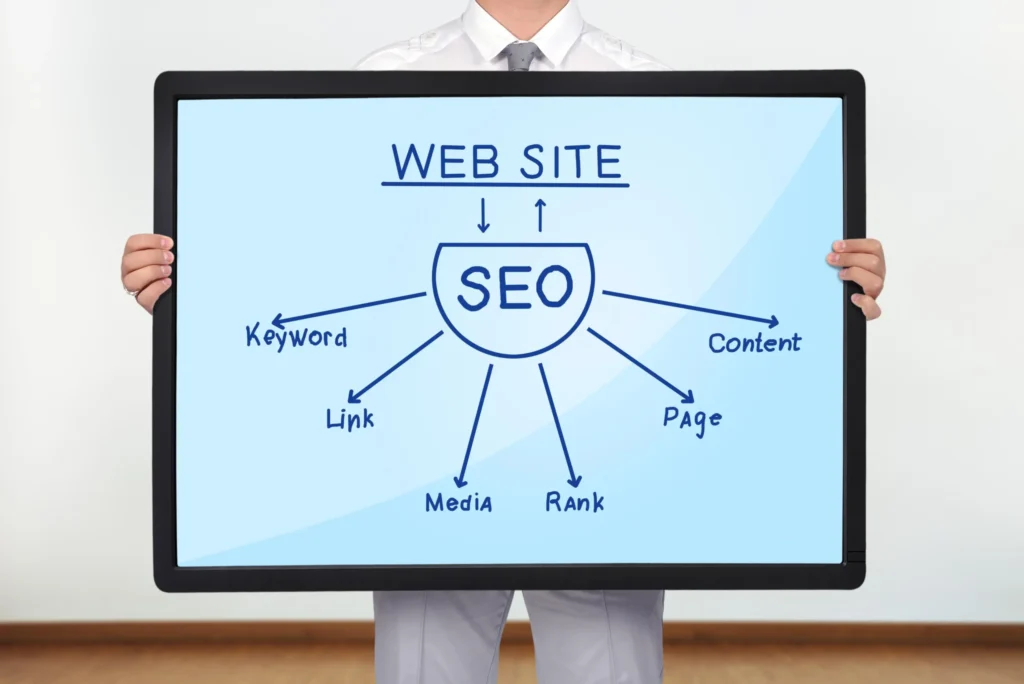
- A clear SEO strategy involves auditing, keyword research, content creation, technical optimization, and link building.
- Companies that adapt to new trends like AI-driven search, voice queries, and E-E-A-T will have a competitive edge.
Understanding How SEO Works for Companies
I often compare SEO to opening a store in the busiest part of town. The higher your search rankings, the more foot traffic you get — except here, “foot traffic” is people actively searching for what you offer.
SEO is about earning that prime spot so your ideal customers find you before your competitors. At Vibe Branding, we’ve refined our SEO approach to focus on three main pillars: on-site optimization, off-site authority building, and technical performance.
On-site is everything a visitor can see and interact with — your content, design, navigation. Off-site is about trust signals, like backlinks and reviews.
Technical SEO ensures search engines can properly index and rank your site. What’s powerful about companies using SEO is that they treat these pillars as ongoing priorities, not one-off projects.
I’ve seen firsthand how a strong SEO program can take a business from being invisible online to becoming the go-to authority in their industry.
How Search Engines Rank Websites
Search engines are in the business of delivering the best answer to a user’s question as fast as possible. When someone types in a query, Google’s algorithms evaluate hundreds of factors to decide which pages to show and in what order.
Keywords are important, but they’re just the start. Google looks at the relevance of your content, the authority of your website, how users engage with it, and the overall experience you provide.
This is why companies using SEO can’t afford to think only about keyword density. They have to think about user intent, content structure, and even things like page load speed and mobile friendliness.
I’ll give you an example from our own experience: we helped a B2B client move from page three to page one for their most valuable keyword by not only rewriting their content but also improving their site speed by 42% and adding schema markup.
The result? A 178% increase in organic leads over six months.
Why Companies Using SEO Outperform Paid-Only Strategies
I’ve had countless conversations with business owners who are hooked on paid ads. And I get it — you can turn them on today and see traffic tomorrow.
But when you stop paying, the traffic stops too. SEO is different. Once you earn your rankings, you can keep attracting visitors for months or even years without paying for each click.
Companies using SEO often see higher-quality leads than those relying solely on ads. That’s because people trust organic results more than sponsored listings.
A study from BrightEdge found that organic search drives 53% of all website traffic, while paid only accounts for about 15%. From my own clients, I’ve seen organic leads convert 30–40% better than PPC leads in many industries.
The other advantage? SEO strengthens every other marketing channel.
When someone sees your ad or social post and later Googles your business, your organic presence reinforces your credibility. That’s not something paid ads alone can do.
The Long-Term Business Benefits of SEO
SEO isn’t just a tactic; it’s an asset. Over the years, I’ve seen companies using SEO create content that still brings in leads long after it was published.
One client of ours has a blog post from 2018 that continues to rank for a competitive keyword and drive thousands in monthly revenue. That’s the compounding effect of SEO.
Beyond traffic, SEO builds brand authority. When you consistently appear in top search results, customers start associating your brand with expertise.
This brand lift translates into higher click-through rates, better conversion rates, and stronger customer loyalty. It’s also a competitive moat.
If you’ve invested in SEO for years, it’s incredibly hard for a new competitor to overtake you without investing heavily themselves. And when your SEO is integrated with email marketing, social media, and paid campaigns, the results multiply.
Choosing Between In-House SEO and an Agency
I’ve worked with clients who’ve tried both in-house and agency SEO, and each has its pros and cons. In-house teams have deep product knowledge and can make changes quickly.
Agencies bring broader experience, advanced tools, and the benefit of working across multiple industries. At Vibe Branding, we often see companies struggle when they try to handle SEO entirely in-house without the right resources.
SEO today requires technical expertise, content strategy, link building, and analytics — it’s rare to find all that in one person. That’s why many companies use a hybrid model: a small in-house team for day-to-day execution and an agency for strategy, technical audits, and large-scale projects.
From my perspective, the right choice depends on your budget, your team’s skills, and how fast you need results. If you’re in a highly competitive space and need to move quickly, partnering with an experienced agency can give you a major advantage.
Core SEO Strategies Every Company Should Start With
Every SEO program we run at Vibe Branding starts with an audit. You can’t fix what you don’t know is broken.
This means looking at site structure, technical health, content gaps, and backlink profile. Once we have that baseline, we move into optimization.
On-page optimization is the low-hanging fruit: refining meta titles, meta descriptions, headings, and image alt text. Then comes technical SEO — ensuring your site is mobile-friendly, loads fast, and has a logical URL structure.
Content creation follows, targeting keywords that match your audience’s intent. Finally, link building rounds out the strategy.
Quality backlinks from relevant sites act like votes of confidence in the eyes of search engines. For companies using SEO, this holistic approach is what creates sustainable results.
Skipping any of these elements is like trying to build a house without a foundation.

Keyword Research: Targeting the Right Audience
One of the most common mistakes I see is companies targeting the wrong keywords. They’ll pick high-volume terms because they sound impressive, but those terms often attract people who aren’t ready to buy.
When we guide companies using SEO, we always start by mapping keywords to the buyer’s journey. That means identifying informational, navigational, and transactional search terms that align with the customer’s intent.
We use a combination of tools — SEMrush, Ahrefs, and Google’s own Keyword Planner — to uncover the phrases customers actually use. Then, we cross-reference that with competitor analysis to see where the real opportunities are.
I’ve seen small businesses outrank massive competitors simply by focusing on niche, high-intent keywords their rivals overlooked. The best part about good keyword research is that it informs your entire content strategy.
From blog posts to product descriptions, every piece of content has a clear purpose and audience. That’s how you stop chasing traffic and start attracting qualified leads who convert.
Avoiding Common SEO Mistakes
Over the years, I’ve seen even well-funded companies sabotage their own SEO without realizing it. The first major pitfall is thin or duplicate content.
Search engines want depth and originality — if your pages are shallow, they won’t rank. Another common issue is over-optimization, where keywords are stuffed into every heading and paragraph.
That might have worked in 2008, but today it’s a red flag. Technical issues can be just as damaging.
Slow site speed, broken links, and poor mobile responsiveness all hurt rankings. I’ve also seen companies ignore analytics, which means they’re flying blind and can’t tell what’s working.
For companies using SEO effectively, regular audits are non-negotiable. One real example: a client came to us after their traffic dropped by 60% overnight.
The cause? A massive number of broken internal links after a site migration.
We fixed the structure, redirected the missing pages, and traffic recovered within two months. Mistakes happen, but ignoring them is where businesses get left behind.
Measuring SEO Success: Tools and Metrics
I’ve always said, “If you’re not measuring, you’re guessing.” SEO isn’t about gut feeling — it’s about data. At Vibe Branding, we use Google Analytics 4, Search Console, and advanced tools like Data Studio dashboards to track key performance indicators.
We focus on metrics that actually matter to the business: organic traffic, keyword rankings, conversion rates, and revenue from organic channels. For companies using SEO, tracking only rankings is a trap — being #1 for a keyword means nothing if it doesn’t bring in paying customers.
We also look at engagement metrics like bounce rate and average time on page to assess content quality. For example, if a blog post ranks well but people leave within seconds, that tells me the content isn’t matching the search intent.
Data isn’t just for reporting — it’s for making smarter, faster decisions that keep you ahead of the competition.

SEO Timelines: How Long Until You See Results?
One of the first questions I get from clients is, “How long will it take to see results?” The honest answer: it depends.
If you’re in a low-competition niche and your site already has a solid foundation, you might see movement within a few weeks. But for most companies using SEO in competitive industries, it’s realistic to expect three to six months before seeing significant results.
That’s because SEO is a cumulative process. Google needs time to crawl, index, and trust your new content and site changes.
Link building takes time, and so does building topical authority. We set milestones along the way — for example, improved rankings for secondary keywords in month two, increased organic traffic by month four, and conversion lifts by month six.
I tell clients to think of SEO like fitness training. You won’t see a six-pack in two weeks, but consistent effort over time produces results that last.
And once you hit your goal, maintenance becomes easier than the initial climb.
Staying Ahead of Algorithm Changes
Google updates its algorithms thousands of times a year, with several “core updates” that can shake up rankings across industries. I’ve seen companies lose years of progress overnight because they weren’t prepared.
That’s why companies using SEO need to stay agile and proactive. At Vibe Branding, we monitor SEO news daily and run site health checks after every major update.
We focus on building strategies that align with Google’s long-term priorities: relevance, quality, and trust. That means avoiding shortcuts like buying spammy backlinks or using AI-generated content without human editing.
Our approach is to diversify traffic sources and strengthen brand authority so a single update doesn’t wipe out visibility. When you’re playing the long game, algorithm updates become opportunities to leap ahead of competitors who cut corners.
Conclusion: Making SEO a Core Business Strategy
After more than a decade in digital marketing, I can say this without hesitation: companies using SEO the right way dominate their markets. They’re not chasing the latest shiny tactic or gambling on ad spend — they’re building a durable foundation for growth.
SEO works because it meets people where they’re already looking. It’s measurable, adaptable, and cost-effective over the long run.
But it’s not magic. It requires research, strategy, execution, and patience.
Whether you choose to handle it in-house, work with an agency like ours, or use a hybrid model, the key is consistency. At Vibe Branding, we’ve seen the transformation SEO can bring to a business.
I’ve watched companies go from invisible online to industry leaders, from struggling for leads to having a steady stream of customers who find them without ads. That’s the power of making SEO a central part of your marketing.
If you’re ready to become one of those companies using SEO to its fullest potential, it’s time to start now. The sooner you invest, the sooner you start compounding results — and the harder it will be for competitors to catch up.