What Does SEO Analysis Meaning Actually Mean?
Let’s break it down simply. When people ask, “What’s the SEO analysis meaning?” they’re really asking how to check if their website is doing well on Google. I’ve been doing SEO for over ten years now, and at Vibe Branding, this is one of the first things we do with any client — we look at how their website performs across several key areas.
SEO analysis helps us understand what’s working, what’s not, and how to fix it. SEO stands for “Search Engine Optimization.” When you do an analysis, you’re reviewing your website like a doctor checks a patient.
We look at your content, your site speed, your keywords, your backlinks, and your user experience. Then we give you the diagnosis and the treatment plan.
This helps you improve your rankings and, ultimately, bring in more customers. So, in plain English, the SEO analysis meaning is simply this: it’s a check-up for your website to help you show up higher on Google.
TL;DR (Too Long; Didn’t Read)
- SEO analysis means checking how well your website is doing in search engines and figuring out how to improve it.
- It’s important because it helps you fix issues and grow your traffic.
- A full SEO analysis looks at on-page SEO, backlinks, site speed, mobile usability, and more.
- You can run your own analysis using tools like Google Search Console, Ahrefs, and Screaming Frog.
- If done right, SEO analysis helps you rank higher, get more visitors, and improve your business online.
What Is SEO Analysis? Here’s How I Explain It to Clients
Whenever I sit down with a client who’s new to this, I start with a quick story. Imagine your website is a car.
If it runs well, it gets you where you need to go—fast and without problems. But if you never open the hood, clean the engine, or check the oil, it’s only a matter of time before something goes wrong.
SEO analysis is how we pop the hood and take a good, hard look at your engine. The SEO analysis meaning goes beyond just checking rankings.
It’s about making sure your website works well for both users and search engines. For example, I once worked with a local business whose pages weren’t even showing up in search results.
After running an SEO analysis, we found out their sitemap was broken and Google couldn’t even see half their pages. That’s what makes SEO analysis such a powerful tool.
It uncovers hidden problems and gives you clear actions to take. Whether you’re a business owner or a marketer, this is your chance to control how your website performs instead of guessing.
Why SEO Analysis Matters More Than Ever
Here’s the truth: we live in a world where Google gets over 8.5 billion searches per day. If your site doesn’t show up when people are looking for what you offer, you’re invisible.
I’ve worked with clients who had amazing services but little traffic, and 90% of the time, the fix was hidden in the SEO analysis. The importance of SEO analysis isn’t just about traffic; it’s about quality traffic.
You want people who are ready to buy, contact you, or learn more about your business. SEO analysis helps you attract these people by making your content, site speed, and structure match what they’re searching for.
It also tells you how Google sees your site. Are your pages fast enough?
Is your content useful? Do you have broken links?
If you never ask those questions, you’re just hoping things work out — and hope is not a strategy. At Vibe Branding, we run these checks often, especially when launching a new site, rebranding, or trying to recover from an algorithm drop.
It’s saved campaigns more times than I can count.
The Core Parts of an SEO Analysis
If you’re serious about understanding the full SEO analysis meaning, you have to know what goes into it. Here are the core parts I always look at — and why they matter.
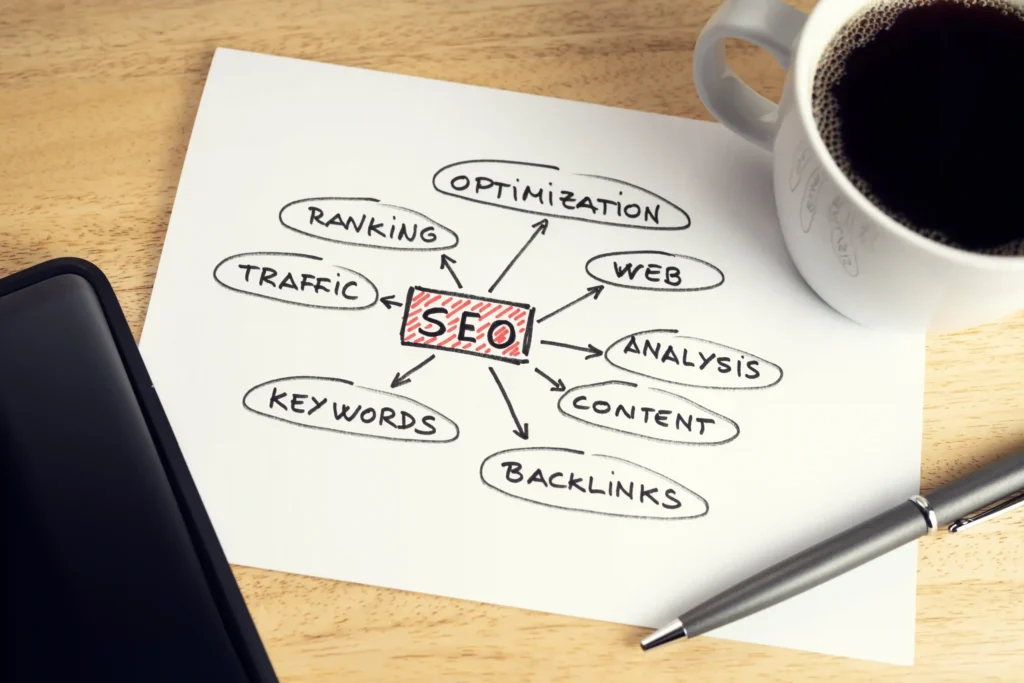
First, there’s on-page SEO. This means the stuff on your actual web pages—like your content, headings, meta titles, and internal links.
Are you using the right keywords? Is the content useful and unique?
We’ve seen pages climb to page one just by fixing a few words in a headline. Second, we look at off-page SEO, which is mostly about backlinks.
A backlink is when another site links to you. Think of it like a vote of confidence.
The more high-quality sites that link to you, the better your chances of ranking. Then comes technical SEO.
This part is all about the behind-the-scenes stuff—site speed, mobile-friendliness, security, and crawlability. A slow site or a broken mobile version can tank your rankings.
Next is content performance. Are people staying on your pages?
Are they clicking around or bouncing right off? This tells us if your content is actually helping your visitors or pushing them away.
Lastly, we check for user experience (UX) problems. If your site is confusing, hard to use, or slow to load, Google notices—and so do your visitors.
Every time we do an analysis at Vibe Branding, we go through all five of these areas. Skipping one is like checking your car’s tires but ignoring the brakes.
How I Perform an SEO Analysis (And You Can Too)
Over the years, I’ve developed a reliable process for doing SEO analysis that works whether I’m helping a local bakery or a multi-location brand. If you’re wondering how to actually apply the SEO analysis meaning to your business, here’s how I do it—step by step.
First, I always start with visibility. I check how the site is performing in Google using Google Search Console.
This shows me what pages are being seen, what keywords are driving traffic, and where the problems are hiding. If you’re not using this tool yet, you’re flying blind.
Next, I dive into keyword performance. I pull up reports to find out what keywords the site ranks for, and more importantly, which ones it should rank for but doesn’t.
This helps shape content decisions and reveals quick wins. Then, I move on to technical issues.
I use tools like Screaming Frog and Google Lighthouse to scan the site for things like broken links, missing tags, or slow load times. Just fixing page speed can sometimes lift rankings by a full position.
After that, I review metadata—titles and descriptions. These tiny text snippets make a big difference in how people (and Google) understand your page.
Poor metadata leads to low clicks, even if you rank well. Finally, I review internal links and overall page structure.
Is the site easy to navigate? Are we sending people to the right pages from within the content?
Google loves a clear path, and your users do too. I document everything in a simple dashboard and highlight the biggest opportunities.
This process takes a few hours but can lead to months of improvement if done right.

My Go-To Tools for SEO Analysis
You can’t understand the full SEO analysis meaning without using the right tools. Over time, I’ve tested nearly all of them—and here’s what actually works.
Google Search Console is the first tool I ever use. It’s free, accurate, and straight from the source.
You’ll see clicks, impressions, top queries, and errors that matter. Google Analytics 4 lets me see how users behave on the site.
I use it to track bounce rates, pages per session, and time on page. These numbers help me decide if content is performing or if it needs fixing.
Screaming Frog SEO Spider is like an MRI for your website. It crawls every page and tells you what’s broken—missing alt text, redirect chains, duplicate content.
This is where most technical problems show up. Ahrefs is great for checking backlinks and keyword data.
I use it to figure out how competitive a keyword is and who’s linking to my clients (or to their competitors). Semrush and Moz Pro are also strong tools if you prefer an all-in-one suite.
They let you track positions, find keyword gaps, and monitor changes over time. I always say this: your tools are only as good as the questions you ask them.
Use them to find why you’re not ranking, not just what’s happening.
What Issues Do I Usually Find? A Lot, Honestly.
If you do a real SEO analysis, you’ll always find something—because no site is perfect. One of the biggest values in understanding the SEO analysis meaning is knowing that it’s about discovery, not judgment.
One common issue I see is missing or duplicate metadata. It sounds small, but it confuses search engines.
If two pages have the same title, Google might ignore one. Another big one?
Slow page speed. If your site takes more than three seconds to load, you’re losing users—and probably rankings.
This is especially true on mobile, where people are less patient. Broken links are another red flag.
These are links that go nowhere and frustrate users. Google sees them as a sign you’re not maintaining your site.
Thin content also shows up a lot. Pages with less than 300 words, or vague content with no real value, just don’t rank anymore.
You have to offer depth and usefulness. Lastly, missing alt text on images hurts accessibility and search visibility.
Alt text tells search engines what an image is about—and it’s a signal Google uses for rankings. When we audit a site at Vibe Branding, we prioritize these issues and fix the worst first.
That alone often results in an uptick in traffic within weeks.
How Often Should You Do an SEO Analysis?
This is a question I get all the time. And the honest answer is: more often than you probably are.
At a minimum, I recommend doing a full SEO analysis every quarter. This gives you enough time to see results from changes and catch new issues before they grow.
If you’re running an active blog or ecommerce site, monthly checks are even better. These sites change more often, so they need more frequent tune-ups.
Right after a big change—like a redesign, domain change, or major content update—you should run an analysis immediately. I’ve seen beautiful new websites lose 50% of their traffic overnight because someone forgot to redirect old URLs.
We also do weekly monitoring of top pages and keywords. This helps us spot early signs of ranking drops or UX problems.
Think of SEO analysis as regular maintenance, not a one-time project. It’s what keeps your digital engine running smoothly.
How I Turn SEO Data Into Better Rankings
This is where the real fun begins. Once I have all the data, I don’t just file it away—I use it to drive strategy.
If I see a page ranking on the second page of Google, that’s a perfect target. I look at what’s missing—maybe it needs better internal links, updated stats, or more focused keywords.
Small changes can bring big wins. If bounce rate is high, I rework the layout or headline to better match search intent.
Sometimes just adding bullet points, a video, or a FAQ section can reduce bounce by 20%.
When I find keyword gaps, I create new content. I like to build a topic cluster: a main guide and several supporting blogs that link back to it.
This helps Google understand the topic depth and improves the site’s authority. And when backlinks are weak, we do outreach.
We write guest posts, build partnerships, or create link-worthy assets like infographics or tools. Good SEO analysis gives you a treasure map.
The trick is following the clues and executing well.
Is SEO Analysis the Same as an SEO Audit?
Nope—and this is where a lot of people get confused. The SEO analysis meaning is often mistaken for a full SEO audit, but they’re not exactly the same thing.
An SEO audit is like a full inspection. It’s a one-time, wide-ranging review of every part of your site.
It’s something we do at the start of a project to set a baseline. An SEO analysis, on the other hand, is more like a regular health check.
It focuses on specific areas—like a dip in rankings, a new content campaign, or a site speed issue. Think of it like this: an audit is a 100-point checklist.
An analysis is the 10-point monthly review that keeps your progress on track. We do both at Vibe Branding, depending on what stage the client is at.
If you’re just getting started, go with the audit. If you’re already ranking but want to climb higher, regular analysis is your best friend.
Final Thoughts: Make SEO Analysis a Core Habit
After ten years of running Vibe Branding, I can say this with full confidence: SEO analysis is one of the most powerful habits you can build for your business. It keeps you informed.
It helps you spot problems early. And it gives you clear, data-driven steps to improve your site and grow your traffic.
When people ask me what “SEO analysis meaning” really comes down to, I tell them this: it’s how you stay visible, valuable, and competitive online. You wouldn’t drive your car for years without a tune-up.
Don’t treat your website any differently.
If you’re not sure where to start, reach out to us at Vibe Branding. This is what we do every day. We turn data into action and action into results.
Now, go check under the hood of your site. There’s a whole world of opportunity waiting.