What Does “How to Use SEO for Marketing” Mean?
SEO stands for Search Engine Optimization, and it’s all about making your website show up in search results when people type questions into Google. Think of it like this: if your customers are searching for the kind of service you offer, SEO is what helps them find you before they find your competitors.
When we talk about “how to use SEO for marketing,” we’re talking about using that power to grow your brand, get more customers, and generate more sales—without paying for every click.
TL;DR — What You’ll Learn in This Guide
- What SEO is and why it’s a key part of modern marketing
- How SEO helps you reach more people and grow your business
- The core parts of a great SEO strategy (on-page, off-page, technical)
- How to track success and avoid common mistakes
- Tools we use at Vibe Branding to make SEO work
- How to start using SEO even if you’re on a tight budget
What is SEO and How Does It Fit Into Marketing?
When I started Vibe Branding more than 10 years ago, I didn’t fully understand the long-term value of SEO. I thought marketing was mostly about ads, email lists, and flashy campaigns.
But over time, I saw the difference between short bursts of traffic from ads and the steady flow of visitors that came from search engines. That’s when I realized SEO isn’t just a marketing tool—it’s a core part of how people discover brands.
SEO fits perfectly into digital marketing because it aligns with customer behavior. People are searching every day—on their phones, laptops, even with voice commands—and they’re looking for information, services, or answers.
When your site is optimized, you’re able to meet them right there in the search results. And unlike ads, you’re not paying for each visit.
That’s why understanding how to use SEO for marketing has become a cornerstone of every strategy we build.
Why SEO is Essential for Marketing Success in 2025 and Beyond
We’re living in an age where people trust Google more than they trust salespeople. If you’re not showing up in search, you’re invisible to a huge percentage of your potential market.
At Vibe Branding, we’ve helped businesses go from local word-of-mouth to national recognition just by refining their SEO. Here’s what’s happening now: mobile searches are dominating, voice search is rising, and Google is rewarding high-quality, helpful content.
These aren’t trends—they’re shifts. SEO helps you meet users with the right content at the right time, whether it’s someone looking for your service locally or researching an issue your product solves.
We’ve also seen that organic search drives the highest ROI across nearly every campaign we run. It’s not instant, but when done well, SEO builds real momentum.
For long-term success, it’s one of the best investments any marketer or business owner can make.
Core Components of an Effective SEO Strategy
After managing hundreds of SEO campaigns, we’ve found that a successful strategy has three main parts: on-page SEO, off-page SEO, and technical SEO. Each one supports the others, and skipping any of them leaves you vulnerable to competitors.
On-page SEO includes everything you do on your site: choosing keywords, writing titles and meta descriptions, optimizing headings, and making sure your content is valuable and readable. This is where most people start, and for good reason—it’s your foundation.
Off-page SEO is about what others say about your site. This includes getting backlinks from other reputable sites, being mentioned on social media, and growing your authority across the web.
We’ve helped clients get featured in industry blogs and local news, and these mentions moved the needle more than some paid campaigns. Technical SEO often flies under the radar, but it’s critical.
It includes site speed, mobile responsiveness, crawlability, and structured data. If Google can’t read your site clearly, it won’t rank it—no matter how good your content is.
One of the first things we do at Vibe Branding is run a full technical audit to fix hidden issues that block search visibility.

How to Use SEO to Increase Organic Traffic and Generate Leads
This is where it all comes together. If your goal is more traffic, more leads, and more customers, here’s how to use SEO for marketing in a practical way.
First, start with keyword research. Use tools like Google’s Keyword Planner, Semrush, or our personal favorite—Ahrefs—to find what your audience is searching for.
Then, build content around those terms. This can be blog posts, landing pages, FAQs, or service pages.
Make sure the content answers the questions your audience is asking. Next, you need strong calls to action (CTAs).
A blog post that brings in thousands of views is useless if it doesn’t convert. Whether it’s a contact form, free guide, or product demo—give people something to do next.
Consistency matters too. SEO isn’t a one-time task.
We publish optimized content weekly for our clients and build out clusters of topics that link together. Over time, Google sees your site as an authority in your niche—and that’s when the magic starts happening.
Best SEO Tools and Platforms for Marketing Professionals
In our agency, we rely on a mix of free and paid SEO tools to guide our decisions. One of the biggest mistakes we see people make is trying to guess what’s working instead of using data.
Our go-to stack includes:
- Google Analytics & Search Console: These are non-negotiable. They tell you where your traffic is coming from, what people are clicking, and which keywords you’re ranking for.
- Ahrefs: Excellent for keyword research, backlink tracking, and content gap analysis.
- Screaming Frog: Perfect for technical audits—find broken links, duplicate content, and crawl issues fast.
- Surfer SEO or Clearscope: These help us optimize content based on real search data.
- Yoast SEO: A solid plugin for WordPress sites to manage on-page elements like titles, meta descriptions, and readability.
We also use Google Trends to watch for shifts in keyword popularity. Tools are only as good as how you use them, but these platforms give us the edge to make smarter SEO moves.
How to Measure and Track SEO Marketing Success
Once your SEO strategy is in place, it’s critical to track how it’s working. You can’t improve what you don’t measure.
At Vibe Branding, we set KPIs (key performance indicators) for every SEO project before we write a single word of content. That includes rankings, traffic, conversion rates, and page engagement.
We recommend using a mix of Google Analytics and Google Search Console to get the most complete picture. Analytics helps you track where visitors come from, how long they stay, and whether they take action.
Search Console shows you which keywords you’re ranking for, which pages are getting clicked, and where there might be indexing issues. Tracking tools like Ahrefs or SEMrush also give you competitive insight—are you gaining ground or losing visibility compared to others in your space?
We look for improvements in impressions, clicks, and bounce rate. But most importantly, we focus on conversions.
Are visitors turning into leads? That’s the true success metric for anyone learning how to use SEO for marketing.

Common SEO Mistakes (And How to Avoid Them)
After 10 years in the SEO game, I’ve seen a lot of missteps—and made a few myself in the early days. The biggest mistake is thinking SEO is a quick fix.
It’s not. It’s a slow-build system that rewards consistency and effort. Another frequent issue is keyword stuffing.
Adding your target phrase to every sentence doesn’t help your ranking—it confuses your readers and flags Google. Focus on natural, helpful writing instead.
Also, many sites ignore internal linking. That’s a missed opportunity.
Internal links help both users and search engines navigate your site better. I also see people overlook technical SEO.
Broken links, slow pages, missing meta tags—these all hurt rankings silently. Use a tool like Screaming Frog to catch and fix them. Lastly, don’t ignore content updates.
Fresh content performs better, and Google rewards active sites.
When and How to Update Your SEO Strategy
SEO isn’t a set-it-and-forget-it tool. It evolves.
Google updates its algorithm thousands of times per year, and user behavior constantly shifts. We recommend auditing your SEO strategy at least once a quarter.
That includes reviewing old content. If a blog post ranks well but hasn’t been touched in two years, it’s due for a refresh.
Add updated stats, include new visuals, and check if the keywords are still relevant. This is one of our favorite tactics because it often boosts rankings with minimal effort.
We also evaluate content gaps monthly. What are competitors ranking for that you’re not?
What’s changed in your industry that needs addressing? SEO should align with your marketing goals—and your content should always reflect what your audience wants now, not what they wanted last year.
How SEO Supports and Enhances Other Digital Marketing Channels
If you’re only using SEO in a silo, you’re missing half the value. One of the reasons we emphasize how to use SEO for marketing is because it strengthens everything else you do.
For example, your paid ad campaigns will perform better if your landing pages are SEO-optimized. Quality Scores go up, and cost per click goes down.
Content created for SEO—like blog posts or guides—can be repurposed into email newsletters, social posts, or scripts for video marketing. We regularly pull snippets from top-performing posts and use them as LinkedIn content or Instagram reels.
Also, SEO data reveals what your audience is searching for in real time. That insight is gold for PPC and email campaigns.
If we see “affordable branding services” trending in Search Console, we’ll build a campaign around it across multiple channels. Lastly, SEO builds trust.
Ranking high in Google isn’t just about clicks—it’s a signal to your audience that you’re legitimate, knowledgeable, and worth their time. That boosts every other part of your marketing strategy.
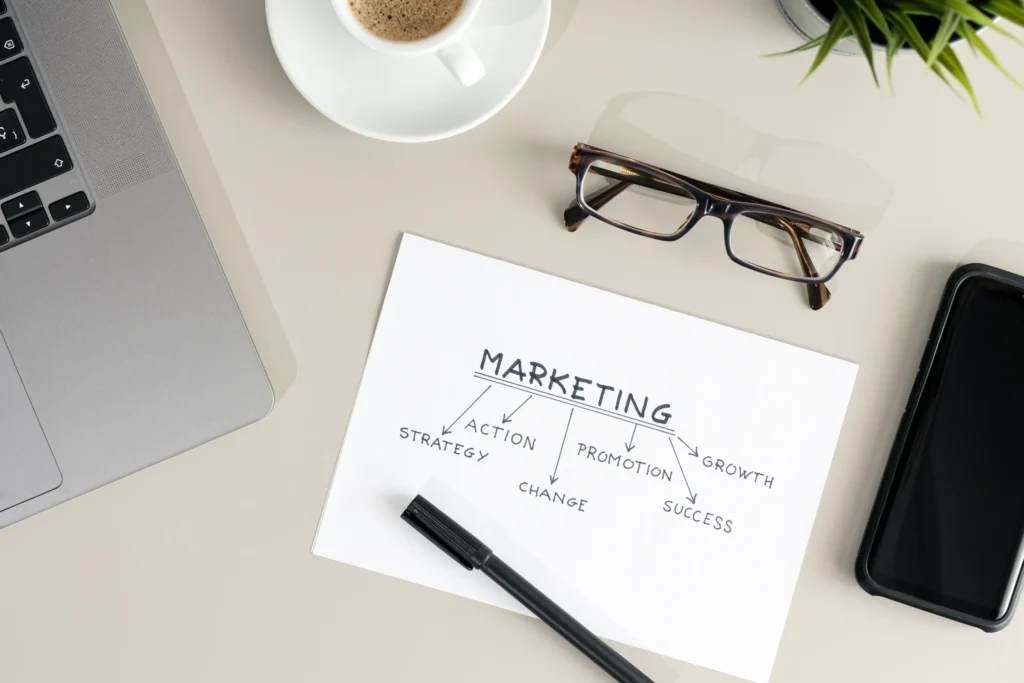
Using SEO on a Budget: Smart Tips for Small Businesses and Startups
We’ve worked with startups and solo entrepreneurs who didn’t have the budget for full-service SEO. The good news?
You can still win. Start with the basics: a fast, mobile-friendly website and a Google Business Profile.
Those two steps alone can drive local traffic quickly. Use free tools like Google Search Console and Keyword Planner.
Focus on long-tail keywords that are less competitive but still relevant. Instead of trying to rank for “marketing agency,” aim for “branding agency in [your city]” or “affordable logo design packages.”
Create helpful blog posts that answer specific customer questions. You don’t need 50 posts to start—you need 5 good ones that speak directly to your audience’s problems.
And don’t be afraid to reach out to local blogs or businesses to exchange backlinks. It’s free and effective. SEO for small businesses is about doing the right things, consistently, not doing everything all at once.
That’s how we grew Vibe Branding—step by step, with focus and purpose.
Conclusion: Turning SEO Into a Scalable Marketing Asset
If you’ve made it this far, you now know how to use SEO for marketing in a way that actually moves the needle. It’s not about gaming the system.
It’s about building trust, answering questions, and showing up when it matters. We’ve used these same principles to help startups become brands and to grow Vibe Branding into a trusted name in digital marketing. SEO works.
But only if you treat it as an ongoing commitment—not a quick win. So whether you’re just starting out or refining your strategy, remember this: every blog post, every keyword, every improvement adds up.
And that compounding effect is what separates those who get buried in search from those who rise to the top. If you’re ready to take the next step, reach out to us.
We’d love to show you what a real SEO plan looks like—for your business, your goals, and your future growth.