What is an SEO Marketing Proposal?
An SEO marketing proposal is a professional document that outlines the strategy, scope of work, goals, pricing, and timeline of an SEO campaign. It’s not just a list of services; it’s your first impression.
In our experience at Vibe Branding, where we’ve spent over a decade helping clients across industries dominate search results, a well-crafted SEO marketing proposal has been the key to turning conversations into long-term partnerships. It communicates exactly what you plan to do and what your client can expect in return.
Think of it as a bridge between curiosity and commitment. If you’re not explaining your plan in a way that builds trust, you’re probably losing deals.
TL;DR: What You’ll Learn in This Post
- What an SEO marketing proposal is and why it’s essential for agencies and freelancers.
- The must-have sections every high-converting proposal should include.
- How to personalize a proposal to specific client industries or goals.
- What data and tools to use to boost trust and communicate ROI.
- How to avoid the biggest mistakes and close more deals confidently.
- A personal breakdown from our team at Vibe Branding with 10 years of SEO experience.
Why SEO Proposals Matter More Than Ever
From our early years pitching small business owners to now handling multi-channel campaigns, I’ve seen one truth remain: clients need clarity. Without a clear proposal, SEO can seem abstract or even suspicious.
Clients are bombarded with freelancers and agencies claiming to “rank #1 overnight”—which we all know is unrealistic. At Vibe Branding, we’ve closed deals faster and more confidently by presenting a clear SEO marketing proposal.
These documents reduce back-and-forth, set the tone for collaboration, and prove that we’re not just service providers but strategic partners. When a proposal communicates value in simple terms, clients lean in and say, “Yes, this is what I need.”
The Key Ingredients of a Winning Proposal
After years of fine-tuning, here’s what we always include in our SEO marketing proposals. First, we start with a brief, tailored cover letter. This is where we speak directly to the client’s pain points.
Next, we introduce our agency—not just our services, but our mission: making marketing easy, exciting, and data-driven. We support this with testimonials, case studies, and examples that prove our work.
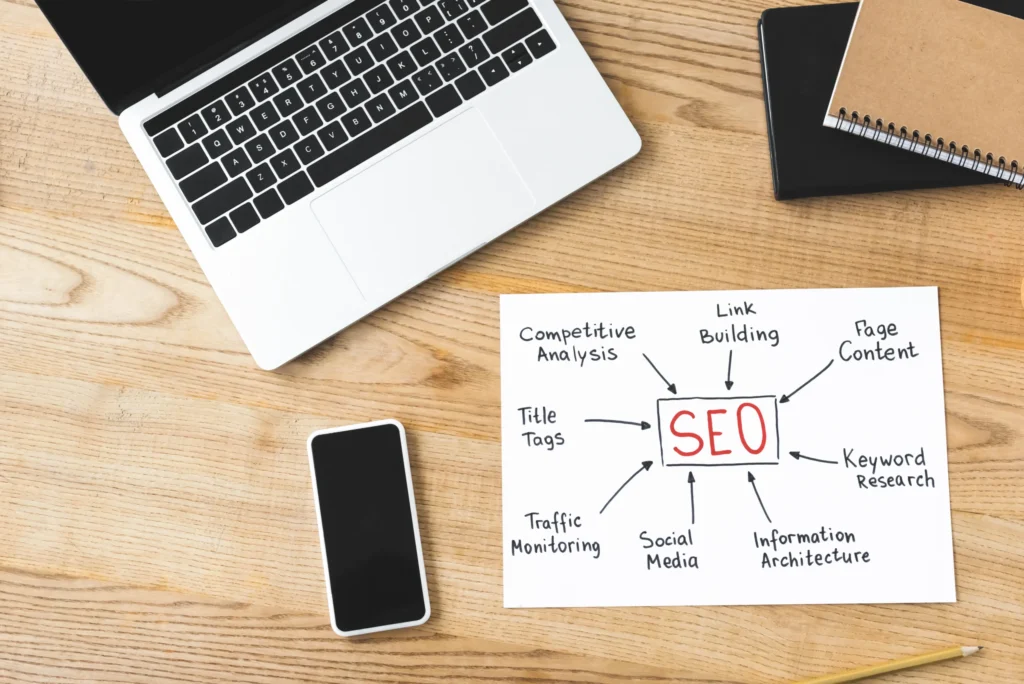
Then we lay out a crystal-clear scope of services: keyword research, technical audits, content optimization, local SEO, link building—all explained in plain language. Every proposal includes a timeline broken into 30/60/90-day phases.
Finally, we break down pricing by tiered options. Clients love seeing what they’re getting at each level. Transparency leads to trust.
How We Customize for Each Client
No two businesses are the same, and your proposal shouldn’t be either. At Vibe Branding, we never send the same proposal twice. For example, if we’re pitching a B2B SaaS company, we lean into technical SEO and content thought leadership.
But for a local fitness brand, our emphasis shifts to local packs, reviews, and map optimization. We often begin our research using tools like Ahrefs or Semrush, running a quick audit and competitive analysis.
Then we take 30 minutes to identify opportunity gaps in the client’s keyword portfolio or backlink profile. This helps us personalize every part of the proposal—from services to KPIs—and shows the client we’ve done our homework.
It’s not just about “getting the job.” It’s about proving we understand their business.

Make the Data Work for You
Clients might not care about keyword density, but they do care about ROI. That’s why we turn SEO data into business language. For example, instead of saying, “You rank #58 for ‘custom cabinets,’” we say, “You’re missing out on 1,200 local searches per month.”
This reframing helps clients connect SEO with their bottom line. We also include current traffic estimates, average bounce rate, and competitor benchmarks.
A simple data table like the one below adds instant credibility:
Metric | Client Site | Competitor A | Industry Avg |
Monthly Organic Traffic | 2,300 | 7,100 | 5,500 |
Avg Keyword Position | 42 | 19 | 30 |
Domain Authority (Moz) | 18 | 36 | 25 |
Bounce Rate | 72% | 49% | 55% |
This allows us to frame our strategy as the solution to closing that performance gap.
Speaking the Language of ROI
Many times, what gets a client to sign isn’t the strategy; it’s how you explain the return. At Vibe Branding, we use realistic forecasts, not hype.
If we project a 30% traffic increase, we also estimate how that might impact leads or revenue, using the client’s own numbers when possible. We say things like, “If your current conversion rate is 2%, this traffic growth could bring 40+ new leads monthly.”
That’s a result they can visualize. We also walk clients through past results.
One of our eCommerce clients saw a 68% lift in non-branded organic traffic within five months—we share that story in a short paragraph, not a case study PDF. It’s simple, fast, and compelling.
Keeping It Clean: Design and Format Tips
Your proposal shouldn’t look like a cluttered Google Doc. We design ours in clean, branded templates.
Minimalist, with plenty of white space, clear headings, and icons where needed. We aim for 8 to 12 pages.
Too short, and it feels rushed. Too long, and it overwhelms.
Every page has a clear purpose. A well-placed image of an SEO dashboard, a keyword map, or a graph showing traffic over time adds visual rhythm.
We also provide the proposal in PDF format with optional interactive features for enterprise clients. The goal is to match the professionalism of the services we’re selling.
Avoid These Costly Mistakes
Here’s where I’ve seen others fail. First: too much jargon.
Clients don’t care about “canonical tags” or “crawled-but-not-indexed” unless you explain what it means to them. Second: generic proposals.
If your intro still says “Dear Client,” you’re doing it wrong. Third: overselling.
Never guarantee page-one rankings or 500% traffic jumps in 30 days. It’s a recipe for distrust.
Fourth: missing the follow-up. You’d be shocked how many people send a proposal and never check back.
Lastly: skipping the pricing structure. Clients want options.
Without it, they feel boxed in. We’ve landed six-figure contracts by simply offering three tiers and letting the client choose based on their comfort.
Trust Builders: Case Studies, Testimonials, and Visual Proof
When a client reads your SEO marketing proposal, they’re not just evaluating the plan; they’re deciding if they trust you. We always include real feedback from our current clients.
A short line like, “Vibe Branding helped us grow our organic sales by 3X in six months,” carries more weight than any bullet list of features. We also link to live examples of rankings, before-and-after traffic charts, or even a Google Drive folder of past deliverables (yes, we blur sensitive info).
Anything that shows real results, real people, and real outcomes builds credibility. It tells the client: you’re not just another agency—you’re the right agency.
Conclusion: Strategy, Trust, and Clarity Close the Deal
After 10 years of building SEO strategies for businesses big and small, I’ve learned this: a strong SEO marketing proposal is more than just a sales document—it’s your handshake, your pitch, and your first promise all rolled into one. When you take the time to personalize your proposal, show real data, and explain your strategy in simple terms, you stand out.
You become more than just “another agency.” You become the one they trust. At Vibe Branding, we’ve fine-tuned this process through real conversations, real feedback, and real results.
Whether you’re just starting out or scaling your digital agency, building your own SEO marketing proposal with clarity and confidence is a game-changer. Don’t just sell SEO—show the value of what you do in a way that makes clients feel smart for saying yes.
So now it’s your move. Use this guide, take our template, and turn your next pitch into a signed agreement.
That’s how you grow. That’s how you win.