What is an SEO Marketing Strategy Template?
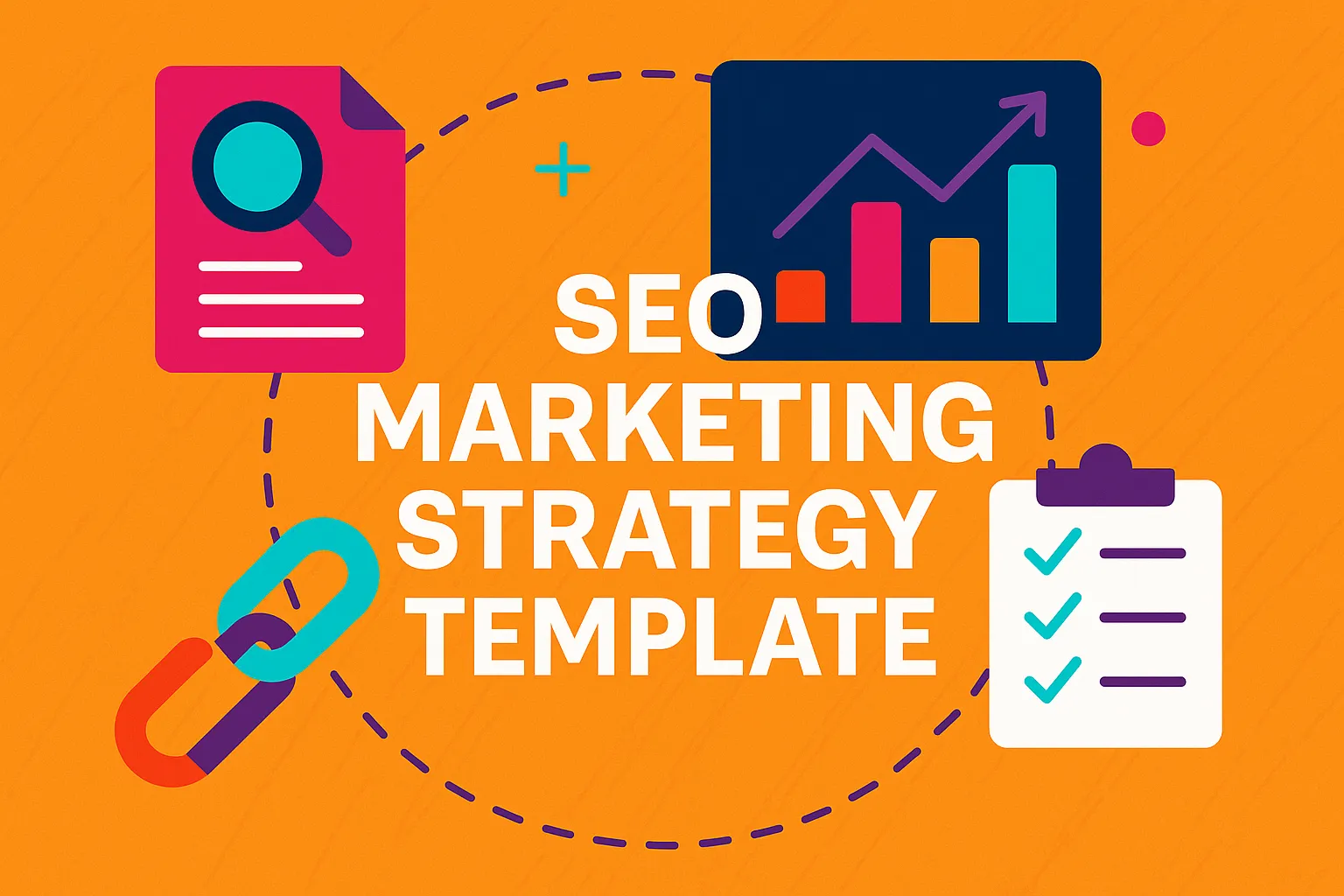
An SEO marketing strategy template is a structured framework that helps marketers and business owners organize their search engine optimization efforts. Think of it as your roadmap for how to get found on Google.
It outlines everything from who you’re targeting to which keywords you’re going after, what content you need to create, and how you’ll track success. At Vibe Branding, we’ve used our own template for years to help our clients boost traffic, rank for competitive keywords, and grow their business.
Having a clear strategy keeps you focused and accountable, especially when you’re juggling multiple marketing channels.
TL;DR (Too Long; Didn’t Read)
- Learn what an SEO marketing strategy template is and why it matters.
- Use our expert-backed framework to build your own SEO plan.
- Understand key elements like keyword research, content planning, and tracking.
- Customize your SEO template based on your industry and business goals.
- Avoid common SEO mistakes and integrate your strategy with paid and content marketing.
- Access our free downloadable template and get practical tips from 10 years of digital marketing experience.
- Learn what an SEO marketing strategy template is and why it matters.

Why Every Business Needs One
Over the past 10 years running Vibe Branding, I’ve seen too many companies jump into SEO without a clear plan. It’s like building a house without a blueprint. They chase random keywords, create content that doesn’t convert, or completely ignore technical SEO.
That’s why we developed a SEO marketing strategy template that not only keeps your goals front and center but also makes it easier for teams to collaborate and measure results. Whether you’re in ecommerce, local services, or SaaS, having a repeatable strategy will save time, reduce guesswork, and ultimately drive more revenue.
Without a template, it’s easy to get stuck spinning your wheels. I remember one client who spent six months blogging weekly without gaining any organic traffic.
Why? They targeted keywords nobody was searching for.
Once we applied our template and adjusted their content around relevant search terms, their traffic grew 320% in three months. The difference was strategy, not effort.
What’s Inside a Great SEO Marketing Strategy Template
We designed our template to mirror what actually works in the real world. It’s the same framework we use with our clients at Vibe Branding.
It starts with benchmarking. First, you assess where your site currently stands using tools like Google Search Console or Ahrefs.
This gives you a clear picture of your organic traffic, keyword rankings, and backlink profile. Then you set SMART goals: Specific, Measurable, Achievable, Relevant, and Time-bound.
After goal setting, the next step is keyword research. This is where you figure out what your audience is searching for.
We suggest using seed keywords, then expanding using keyword tools. Once you have your target terms, the content planning section helps you decide what pages or blog posts to create.
Each keyword gets mapped to one piece of content. Then there’s on-page SEO and optimization.
This part includes internal linking, meta tags, headers, and media. Finally, we track performance monthly—looking at traffic, rankings, conversions, and bounce rate.
The template acts like a living document that evolves with your goals and results.
Component | Description |
SMART Goals | Define clear traffic, ranking, or revenue goals |
Keyword Research | Identify high-potential terms based on search volume and competition |
Content Planning | Map keywords to pages and blog topics |
On-Page SEO | Optimize titles, headers, and structure for user experience and SEO |
Tracking Metrics | Monitor rankings, CTR, traffic, and engagement |
Customizing the Template for Your Business
One thing I’ve learned after helping hundreds of businesses: SEO is never one-size-fits-all. That’s why we designed our SEO marketing strategy template to be fully customizable.
If you’re a local service provider, you’ll want to focus more on location-based keywords and Google Business Profile optimization. If you’re in ecommerce, your product and category pages will take priority.
For B2B or SaaS companies, it’s all about long-tail keywords, demo conversion pages, and building trust through thought leadership. Our template includes editable sections that let you adapt based on your audience, budget, and goals.
For example, an ecommerce brand might prioritize product schema and site speed, while a local dentist may need citation building and review generation baked into their strategy. We’ve even included notes for aligning the SEO plan with your brand’s voice and customer journey.
The goal is to make the strategy yours—not just a generic checklist. I’ve had clients in industries ranging from yoga studios to enterprise tech, and no two templates looked exactly the same.
What mattered was that each one was rooted in data and had a clear execution path. The best part?
When a strategy is personalized, your chances of outranking competitors skyrockets.

Step-by-Step: Putting the SEO Strategy into Action
Now that you have the template, the next step is execution. This is where most people get overwhelmed—but it doesn’t have to be complicated.
Start by auditing your current site using tools like Ahrefs, Semrush, or Google Search Console. This will show you what’s working and what’s not.
Look at metrics like top-performing pages, bounce rates, and which keywords you already rank for. Next, dive into keyword research.
Use tools to find what your ideal customers are actually typing into Google. Look for patterns, group keywords into clusters, and assign a purpose to each one.
Then it’s time to map those keywords to content. Build a list of blog posts, landing pages, or service pages you need to create or improve.
After that, shift focus to content creation. Every piece of content should align with search intent—whether it’s informational, navigational, or transactional.
Make sure each page includes internal links, fast load times, and easy navigation. Then publish and promote.
Don’t forget to revisit your template weekly or monthly to track progress. Update keyword rankings, traffic numbers, and content performance.
Use these insights to adjust your plan over time. The more consistently you implement and refine, the better your results will be.
When to Revise or Update Your SEO Strategy
Just because you’ve built a solid plan doesn’t mean it should stay static. SEO evolves constantly.
Google updates its algorithm, search trends shift, and your business goals change. That’s why part of our SEO marketing strategy template includes scheduled check-ins.
At Vibe Branding, we advise our clients to audit their SEO strategy quarterly. The signs it’s time to revise are usually obvious: plateauing traffic, declining rankings, or a drop in conversions.
But even if things are going well, small tweaks can lead to big gains. Maybe a blog post is starting to rank—now it needs backlinks.
Maybe a competitor just launched a new feature—now you need to update your comparison page. One of our ecommerce clients noticed a 15% dip in organic traffic.
After a review, we saw that their top product page had lost featured snippet visibility. We rewrote the intro paragraph, added schema markup, and improved the page’s speed.
Within 3 weeks, their rankings bounced back. It’s that type of agile mindset that makes SEO strategies thrive. Set a calendar reminder to check your template regularly.
Look at your SMART goals. Are you hitting them?
Do new keywords need to be added? Did Google introduce a new ranking factor like page experience?
Treat your SEO strategy like a living thing—because it is.
How SEO Aligns with Paid Media, Social, and Content Marketing
One of the most powerful benefits of having a template is that it makes integration easier. Your SEO marketing strategy template isn’t just for organic content.
It should inform every part of your marketing engine. For example, keywords you discover during SEO research can also guide your Google Ads or Facebook targeting.
If a blog post is ranking well, turn it into a video for Instagram or a script for a YouTube ad. At Vibe Branding, we always make sure our SEO plans align with paid media and social strategy.
If you’re investing in PPC, we’ll use SEO insights to make those campaigns more efficient. If your content team is stuck on what to write, the SEO roadmap gives them instant direction.
We even use the template to plan which blog content can eventually become whitepapers or email sequences. A solid strategy is the glue that holds your content ecosystem together.
It brings consistency to your brand voice, ensures messaging matches buyer intent, and allows your marketing to scale without confusion. That’s why our clients often tell us their SEO plan became the backbone of their entire marketing workflow.
Tools That Help You Fill Out and Execute the Template
Executing an SEO strategy is a lot easier when you have the right tools. Inside our SEO marketing strategy template, we’ve included links to some of our favorite platforms.
For keyword research, we recommend Ahrefs, Semrush, or Ubersuggest. They help you find search volume, keyword difficulty, and even competitor insights.
For writing content, SurferSEO and Clearscope are amazing for optimizing in real time. Yoast SEO or Rank Math can help ensure your blog posts are technically sound before publishing.
To monitor your performance, Google Analytics, Google Search Console, and Ahrefs Rank Tracker are must-haves. If you’re managing a team or campaign, use Notion or Asana to assign tasks and track deadlines.
We also love using Google Sheets to track keyword progress and status updates. When everything is organized, you’ll find it easier to stay consistent, which is where the real results happen.
One last tool we often use: AnswerThePublic. It’s great for understanding what people are asking about your topic, which helps you fill in content gaps and uncover long-tail keyword goldmines.
Mistakes to Avoid When Using an SEO Marketing Strategy Template
I’ve seen some businesses download an SEO marketing strategy template and still struggle to get results. Why?
Because how you use the template is just as important as having one. One of the most common mistakes is choosing keywords that are too competitive or too vague.
If you’re a small business, don’t waste time chasing keywords like “digital marketing”—start with long-tail phrases like “digital marketing agency for dentists in Phoenix.” These will give you a better shot at ranking and converting.
Another pitfall is ignoring search intent. Just because a keyword looks good doesn’t mean your page is what people are expecting.
If someone searches “best coffee grinder,” they’re probably looking for a comparison or product list—not a 500-word blog post on coffee history. Your content must match what users are trying to do.
Otherwise, even if you rank, they’ll bounce—and Google notices. A third mistake is not optimizing for technical SEO.
Things like slow load times, broken links, or unoptimized images can silently kill your rankings. Make sure your site is mobile-friendly and fast.
I’ve personally seen a site jump 8 spots in search results after compressing images and reducing page load time by just two seconds. Another big one?
Not aligning your SEO goals with your business goals. You’re not just trying to rank—you’re trying to grow revenue, build leads, or create brand awareness.
The SEO plan should reflect that, which is why our template always starts with business-focused SMART goals. Lastly, don’t treat the template like a one-and-done project.
SEO is a marathon, not a sprint. The best strategies are revisited, refined, and improved continuously.
Final Thoughts
If you’ve made it this far, you’re already ahead of the curve. Most people want SEO results but aren’t willing to do the strategic work up front.
The fact that you’re exploring the power of a structured SEO marketing strategy template means you’re ready to do things right. Remember: SEO isn’t about hacks.
It’s about helping people find what they need and making sure your business shows up when it matters most. With a great strategy, clear execution, and the right tools, you can dominate search results in your niche.
I hope this post helped you understand not just what to do—but how to do it, and why it matters. If you want to see how we use this template for clients, or you want help customizing one for your brand, feel free to reach out.
At Vibe Branding, we’re always ready to help you make marketing easy, exciting, and effective.